- Racket Business
- Posts
- Let’s Rethink How We Can Increase Tennis Fans
Let’s Rethink How We Can Increase Tennis Fans
Rod Heckelman on growing the game, which doesn’t just happen on the court

Rod Heckelman
December 18, 2025

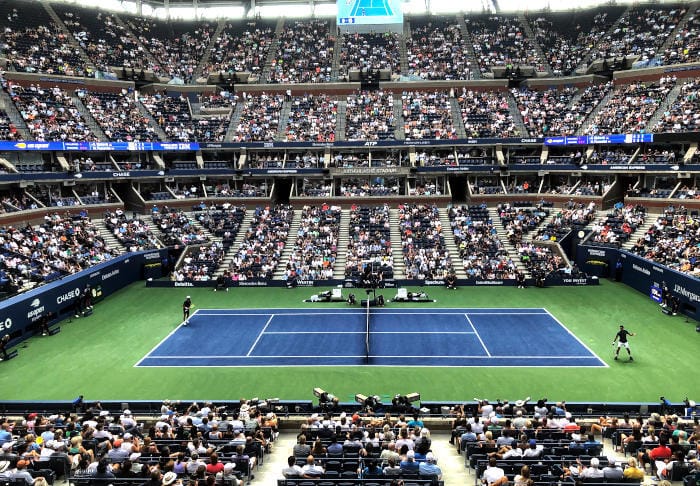
Note that the title is directly addressing tennis fans, not tennis participants. It would be a fair assumption that tennis participants are already fans and are probably watching tennis matches on their cell phones, on TV, or attending events as spectators. Interestingly, when reviewing most other sports, it would show that a large percentage of their fans are not participants in those sports. This is similar to what we see at the U.S. Open, with many non-playing fans enjoying this great event. Kudos to those large, headlining events for being successful in attracting so many fans to the sport. But there's a remaining challenge: why can’t the smaller tennis events attract more fans like the Slams and top-tier events?
It is disappointing to see so many empty seats at these events, which is the reason we need to rethink how we can increase attendance. This poor attendance results in a lack of enthusiasm and the appearance of a sport that is floundering in popularity. It’s great that the major tournaments are so popular, but we should never forget that the tennis industry at all levels and at all venues prospers as one when it comes to developing a loyal fan base and growing the game.
There was a time when many smaller pro tournaments would have representatives contacting the local tennis organizations. Organizations that include coaches, clubs, and junior participants. This practice still exists in a few cities, but not as often as it should be at all events.
A.I. states that the extremely low attendance at the smaller events is a result of top marquee players not entering due to significantly lower prize money. A.I. might be right, but it does not recognize the available solutions.
First, let’s look at the scheduling conflicts of many of those tournaments. Most tournaments hold sessions during the day, making it difficult for people with normal work schedules or children who have school to attend. Often, a large crowd only appears during the evenings, weekends, or for a big final.

Second, watching a full day of tennis is a major commitment. Many top-tier events sell day-long tickets but also provide side venues and activities to entertain the fans. The smaller tourneys offer very little entertainment other than the matches. This is especially important because there is no time limit for tennis matches, a characteristic of tennis that can make it difficult for many spectators and fans who might like to take a break from watching the matches. More side venues should be available, including opportunities to possibly win some free tickets through various types of off-court tennis challenges.
Lastly, as with many sports, there is a strong focus on creating a celebrity-like status for the few top players. For the most part, this would include high-ranked players from the hosting country and the marquee players on the tour. The other players, who are there mainly to improve their ranking and procure some income, are not likely to attract an unknowledgeable fan. Better and more P.R. needs to be disseminated to increase curiosity and interest about all the entrants.
Another idea for building attendance, especially at the early rounds, is working more closely with the local communities. To fill those seats, how about reviving pre-qualifying rounds for these smaller tournaments held at the local tennis facilities? Add to that, those facilities announce when some of the players visit to warm up or practice. It’s a good bet that these facilities would open their doors and provide plenty of court time for those needs. Having the qualifying matches spread throughout the community's local clubs would be a fantastic way to create momentum for the event. Most club members, after watching a player at their club, would be very motivated to attend that player’s opening round match.
Also, at the more intimate setting of their club, members could sit courtside and watch the phenomenal footwork and ball striking. To watch a top pro player up close is a completely different experience from watching it on TV. You could compare it to watching a jet plane take off over your head while standing at the end of a runway, as compared to watching it leave from the airport lounge. Sometimes the best advertising is when you can create an overwhelming experience in person.
Many years ago, the Transamerica Pro event held in San Francisco played qualifying rounds on the courts of San Jose State College. That event added a special pre-qualifying that attracted over 100 of the top local players dreaming of making it to the qualifying rounds. The inclusion of these enthusiastic players proved to be contagious and contributed greatly to an increased early-round attendance. It was interesting to see that most of those who played in the pre-qualifying matches would attend the event, often with their friends or family. The very experience of trying to get through to the main event made them feel that they were part of the tournament, even though only two players ever made it through to the main event in eight-plus years it was held.
When Barry McKay ran that event, he was approached several times about having the qualifying held at some of the more prominent tennis facilities in the Bay Area. As a former top player himself and a proprietor of a tennis facility, you would think that he would appreciate this approach to developing ground zero interest, but sadly, it never came to be.
Another tennis sector that would likely jump at the idea of being part of a local pro event would be any junior program or any of the many new tennis academies. Go a step further and provide special ticket prices for the local schools; it would be a great day trip for any of those young people. In fact, why charge these potential players? There are already empty seats; get them filled, you never know what might spark an interest, resulting in the young spectators taking up the game. We’ve all heard stories about enthusiastic juniors who participated as ball children and then, because of that, became inspired to become top players when they grew up.
There are probably many more ideas to be had to increase the audience for the smaller pro tournaments, and it’s a good bet that those organizing these tourneys are working on this task. It’s an important issue to address because growing the game doesn’t just happen on the court; it can also come from inspiration after watching a live professional match.
 Rod Heckelman | Rod Heckelman's career started in 1966 when he began his 5-year role as a teacher at John Gardiner’s Tennis Ranch in Carmel Valley, California. Later, he opened as the resident pro for Gardiner’s Tennis Ranch on Camelback in Scottsdale, Arizona. |
In 1976, he took over as head professional/tennis director at the Mt. Tam Racquet Club in Larkspur, California, and added the title and responsibilities of general manager in 1982. After 48 years, he retired to work exclusively in helping others in the industry.
In 2010, he was awarded “Manager of the Year” for the USPTA NorCal Division and the “Manager of the Year” at the USPTA World Conference. Rod has written several books, including “Down Your Alley” in 1993, “Playing Into the Sunset” in 2013, and most recently, “250 Ways to Play Tennis.”
He also produced the “Facility Manager’s Manual” and the “Business Handbook for Tennis Pros,” which is distributed by the TIA.