- Racket Business
- Posts
- Never Stop Learning
Never Stop Learning
Toroian - Hagman - Knowles - plus LinkedIn Gold


Cassandra Torojan, Chris Hagman & Mike Knowles
July 28, 2026
Table of Contents
C. Toroian: The Pro Shop Amazon Can't Beat
Your pro shop can be the one place a member discovers something they'll tell their friends about.
The Pro Shop Amazon Can't Beat
By Cassandra Toroian, CEO Ruley.ai and Volleybird LLC
In a companion piece, I argued that handing your pro shop to a turnkey third-party management company in exchange for a 20% profit check quietly trades away the three things that make retail worth doing: your margin, your member data, and your identity. The objection I get to that argument is always the same, and it's a fair one: easy for you to say — running a shop well is hard, and most of us aren't good at it.
True! In this writing, I’m giving you the other half. If you're going to keep your shop because you don’t want to trade away your identity, here is how to build one your members can't replicate shopping in from the court bench with their phone — and why that's the only retail position that actually holds its price.
1. Stop trying to cover the category The instinct in most pro shops is coverage: carry a little of everything so no member walks away empty-handed. The problem is that "a little of everything" is precisely the inventory Amazon and the big DTC brands carry in infinite depth, at prices you can't touch. When you compete on the commodity SKUs, you've picked a fight on the one battlefield where your size is a big disadvantage. So just flip the logic. The job of your shop is not to cover the entire category — it's to curate it. Show your club is “in the know”. Every square foot should be working to answer one question for the member: where else could I have found this? If the answer is "Amazon, cheaper, in two days," that product is costing you more than the shelf space. If the answer is "nowhere — I've never seen this before," you're no longer in a price comparison at all. Differentiated products don’t get price-matched, because there's nothing to match it against. |  Dominique Lemperle: Education, networking, and team building. My favorite things to do in the summer! Step outside the comfort zone of your club and learn from others.  Victor Bergonzoli: BUILDING SOCCER CULTURE STARTS IN THE STANDS |
2. Curate for who your members actually are
Good curation starts with knowing your buyer, and most clubs know theirs better than they think — they've just never merchandised to it. At VolleyBird, our retail e-commerce platform data skews heavily toward a buyer most pro shops under-serve almost completely: the 35-to-65-year-old woman who is frequently buying for herself and doing the buying for the household. She is high intent; she's standing in your facility multiple times a week, and the typical shop offers her a portion of a wall or a rack or two of items she can find on Amazon.
Whatever your specific membership looks like, merchandise to them and not to a generic catalog. Stock the brands that reflect their taste and aspirations, not just their functional needs. The member who can buy a paddle anywhere will buy in your shop the thing she's never seen before — the apparel brand from Europe that hasn't hit US mass retail yet, the design-forward accessory that is an impulse purchase, the gift she can't get at the mall or a big box online store. And, she’s happy to buy it from you, because she has a relationship with you and would rather give her business to the person who took the trouble to find these items for her. | Mike Manzella: A club I work with in New York generated $75,000 in new membership revenue this summer. The GM knows what each one cost to acquire.. just under $300. And next week, they're raffling off a racquet at their ITF tournament. |

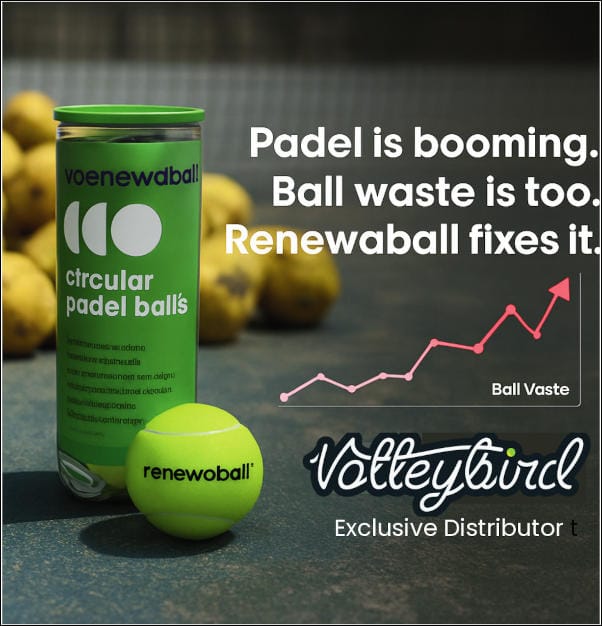
3. Padel is the clearest opportunity on the board right now If you're building or running padel courts at your facility, you have a window that won't stay open. The center of gravity for padel is still in Europe, which means that is where the best apparel and equipment are located. A great deal of what European players consider table-stakes brands have little or no US distribution yet. That gap is a merchandising gift: for a brief period, you can stock product your members genuinely cannot buy anywhere else in the country and be the place that introduced it to them. The clubs that move early here won't just sell more — they'll own the brand discovery, and the loyalty that comes with being first. |  Ken DeHart: Question?? When you go out to rally in practice, why do you start the rally by feeding the ball in underhanded? You feed in, work on your strokes for an hour, then say, "time to work on serves". |
Make discovery the experience
Differentiation isn't only about what's on the shelf; it's about how it's presented. A wall of brands with no story is just a more expensive version of the commodity shop. A small, well-told selection — where the staff can say this is who makes it, this is why it's good, this is why we chose it — turns a transaction into a discovery. Rotate it. Let pieces sell out! Treat a new brand arriving like a small event rather than a restock. Scarcity and story are exactly the levers Amazon cannot pull, which is the entire point of building where Amazon can't follow.

The margin math actually favors you
Here's what makes this more than an aesthetic argument. Commodity inventory forces you into a margin race to the bottom, because the member can check the real price instantly. Differentiated inventory holds its price, because there's no reference point to undercut it. You carry less product, tie up less capital in the long tail of SKUs that never move, and earn a healthier margin on the curated selection that does. A smaller, sharper, well-chosen shop frequently out-earns a sprawling one trying to be everything — and it does it while strengthening the club’s brand instead of diluting it.
That, by the way, is the part the turnkey pitch never mentions. A 20% profit-share on commodity volume can easily be less than full margin on a curated assortment you actually control — and the curated version builds your identity and keeps your member data in-house while it earns. "Easy" and "optimal" are rarely the same number. None of this requires you to personally become a global brand scout or to take on inventory risk you don't want. The reason a model like ours exists is precisely to give clubs the differentiated, can't-find-it-on-Amazon assortment without the legwork of sourcing it brand by brand across two continents. The point isn't who you partner with to get there. The point is the position: a shop that sells what no one else can, to members who are already standing in front of you, at a price that doesn't have to apologize for itself. | Lauren Brown Sundstrom: Play is not a niche topic; it is a biological necessity that belongs in every industry, every workplace, and every conversation about human thriving. Watching Acey carry that message into construction management and HVAC sales: that is the movement. We are grateful and inspired! |
Your pro shop can be the one place a member discovers something they'll tell their friends about. That's worth a great deal more than the easiest check on the table.
 | About the AuthorCassandra Toroian is the co-founder and CEO of VolleyBird, LLC, a multi-sport distribution and curation company that brings differentiated racquet sport and golf products and brands to clubs and specialty retailers. She’s a former D1 lifelong tennis player and entrepreneur with 3 previous exits. Reach out to chat with her at [email protected]. |
C. Hagman: Steps to Health Span
Four pillars and several ways to improve your health span.
Steps to Health Span
People say they want to live a long time, lifespan, yet what they really mean is they want a long, high-functioning life without disease or pain - health span. First, why do you want a better health span? Whatever your reason(s), make these big so you take daily steps to improving your health span! Knowing what to do and doing what you know can be very different. Here are four pillars and several ways to improve your health span.
The first pillar is to prioritize nutrition. Sound nutrition starts by limiting and then avoiding unhealthy foods and drinks. Initially, you may need to detoxify your body from what you are used to consuming, like processed foods, sugar, and alcohol. Take small steps, like limiting items more and more over time. Choose whole foods and raw and organic vegetables. These are like putting premium gas in your car and allow your body to run better! Part of my wellness journey includes spending 10 days at a holistic school where I learned these foods can significantly improve your health. Organic vegetables are nutrient-dense and heart-healthy, as they lower blood pressure and low-density lipoprotein (LDL). Instead of one or two big meals, eat three or four small meals each day. This supports better food choices, keeps blood sugar more stable, and assists goal weight. Depending on your gender, age, and activity, you need approximately 1,600 - 3,000 calories per day. | Emma Victoria Wells: Launching Monday 10 August. Writing GRIT: Building a Business, Leading with Purpose has given me the chance to reflect on the people, experiences and challenges that have shaped both my career and who I am today.  |
Hydrate and drink plenty of water. Our bodies are mostly water, approximately 60%. Take your body weight in pounds, divide by two, and that is approximately how many ounces of water you need each day. Adding activity, like playing tennis, requires more water. Being hydrated serves several body functions, including good cognition.
The second foundation to improve health span is to prioritize sleep. Prepare for quality sleep. How is the sleep environment? Depending on the type, mattresses are good for about 10 years, and cotton sheets are best. Is the room cool, dark, quiet, and well ventilated? Bathe or shower before going to bed, which assists in lowering body temperature. Follow the 3, 2, 1 guideline – avoid eating three hours before, limit drinking two hours prior, and end screen time one hour before bedtime. When is your preferred timeframe for sleep? Plan to go to bed then. Get approximately seven hours of sleep each night. Your number could be six or eight, yet you need about seven hours of sleep for your body to recover. Reconcile before you rest, and do not let the sun go down on your anger. If you made a significant mistake or did something you regret, forgive yourself or apologize. Go to bed with a clear conscience. | Professional Tennis Registry: More value. More benefits. More reasons to be a PTR member. 🎾 |
The third pillar is consistent exercise. Find physical activities you like, which is the key to adherence. A trainer can put together a great routine, yet unless you adhere over time, it is useless. What activities do you enjoy? Those are the ones to be involved in, for you will continue and positively impact your health. Invite a friend to go with you or consider group exercise classes. Work up to 30+ minutes of moderate-intensity exercise five or six days each week.
Rest is part of an overall exercise plan, yet many people rest too much! Plan to exercise and schedule like an important meeting – with yourself! Then, keep your appointment. Cross-train and change routines. We can be creatures of habit, so occasionally do different activities to challenge yourself. This can be as simple as taking a different group exercise class or a new bike route with elevations. Be involved with cardiovascular, weight training, and flexibility exercises. These benefit your heart, lungs, muscles, bones, and mobility. Women have to lift light weights, and men need to do stretching routines. Do cognitive exercises too. This can be learning activities, like board games or chess, a foreign language or ballroom dancing. Take a new course or learn another skill. Read, write, and challenge your mind! The fourth foundation to improve health span is to stay connected. Focus on your vertical relationship with God. When you do this and understand He loves you unconditionally, you can better accept and love yourself. A better vertical relationship with God serves your horizontal relationship with others. Love God and love others. Do little things to be your best self. When you truly care for and like yourself, this puts you in a position to connect with others. | David Gutstadt: Ever since the launch of Ballers, we've been the lucky recipients of a LOT of outreach - from friends, contemporaries and a good number of cold calls. |
Besides a mere “hello” or “good morning”, ask people open-ended questions about things that may be important to them. Ask and learn people’s names and say back their first name. This shows you remember them as a person. Join a new club or organization related to your interest(s), like Toastmasters or cooking, and be active! This allows you to make new contacts and friends! Ask and invite new people into your group. Host or co-host an annual event or party. This could be for your community, favorite cause, or charity. Volunteering and community service give you a sense of purpose and connect you to others.
To improve your health span, prioritize nutrition and sleep, consistently exercise, and stay connected. Let’s take steps together for a better health span! With these, we can have high-functioning lives and positively impact others on and off court!
 |
You can contact him at [email protected]. |
M. Knowles: Game, Set, Cupcake
Why This Is Your Problem, Not a Cupcake Problem
Every club I talk to is fighting the same battle. Better courts. Better technology. Better programming. Better coaching. Every one of them is convinced the win is in the product.
They're wrong. And I didn't learn that on a court. I learned it from a cupcake.
Not just any cupcake. Little Debbie.
The girl on the box you grew up seeing in every lunchbox in America. Oatmeal Creme Pies. Swiss Rolls. Zebra Cakes. For decades, Little Debbie has been the number-one selling snack cake brand in the country, holding roughly a third of the entire category on its own. I sat inside the brand at the time. Unaided awareness nationally was north of 95 percent. Almost nobody in America didn't know this brand.
That's the brand I was standing in front of. Not a startup pitching an idea. An American institution, asking my team to help it win a fight nobody thought it could win. Stick with me here. This isn't a nostalgia trip. Every club, brand, and manufacturer in this industry right now is fighting the exact fight Little Debbie was fighting, and most of them are about to lose it the same way Little Debbie almost did. The answer that won that fight has nothing to do with cupcakes. It's the same answer your club needs. Years ago, I led the team behind the biggest product launch in McKee Foods' history, the family-owned company behind Little Debbie. The competitor was Hostess. Ninety years in the category. Dominant. Entrenched. Ours was a cream-filled chocolate cupcake with a white squiggle on top. Nobody in the room thought we could win on product. The cupcake was good. Hostess's cupcake was also good. CPG margins are thin, and this client ran lean. | Rob Norris: Every club has quieter periods. That is normal. What interests me is not always that numbers have dropped, but when the drop actually started. |
There was no budget to outspend a 90-year incumbent, and no time to build one.
So we didn't try to win on the cupcake. We picked a different fight entirely.
Hostess owned the cupcake. We were going to own the moment you shared one.
THE ANSWER TO A LOW BUDGET
We built the Share-a-thon. Not just a stunt, a full integrated campaign. TV. PR. Paid and organic social. A national giveaway. Consumer promotion. And at the center of it, Smart Cars wrapped to look like the cupcake, touring 21 cities, one goal: get people sharing, not just buying.
The math had to work without a Hostess-sized budget behind it. It did. The campaign generated more than a million sweepstakes entries. On National Chocolate Cupcake Day in New York alone, more than 11,000 people sampled the product. We gave away 125,000 cartons. 500,000 people joined the brand's Facebook page during the run. Eight weeks in, Little Debbie was the number-one selling cupcake in America. Beating a competitor with 90 years and a real marketing budget behind it. That result didn't come from outspending anyone. It came from answering a sharper question than the one everyone else in the category was asking. NOW REPLACE THE CUPCAKE WITH YOUR CLUBOne of the biggest opportunities clubs, brands, and manufacturers have in this industry right now is asking the question that won us that category: what is the moment we own? Brand equity in sports isn't built by facilities. It's built by rituals. The Sunday doubles group that has met every week for six years. | Tennis Insider Club: How does a country of fewer than 11 million people keep producing women capable of winning Wimbledon?  |
The junior player who finally beats the guy who used to beat him every time. The adult beginner who walks off the court already planning to come back. Those are the moments that compound, and they're what make someone say I belong to this club, as an identity, not a subscription.
Amenities are what clubs build. Rituals are what clubs earn. You cannot buy your way into one. You have to design for it the same way we had to design around a budget we didn't have.
Ask your team one question: what moment are we engineering on purpose right now, not hoping for? If nobody can answer specifically, you're building a facility and hoping it's enough.
WHERE I LAND
We didn't have a better cupcake. We had a better answer to what the cupcake was for.
The clubs and brands that build 20-year equity in this industry won't be the ones with the most courts or the newest technology. They'll be the ones who worked out what their sport is actually for and built every decision around protecting that moment rather than the next amenity. You can copy a court in six months. You cannot copy a ritual. Not what are you building. What moment are you selling? HOW WE START WORKING TOGETHER.The easiest way to work with me is the Growth Pressure Review. | Fernando Famoso: One of the greatest lessons tennis has taught me has nothing to do with forehands or backhands. |
The review helps you see where pressure is building across market position, execution, and alignment. It takes about five minutes. Your responses are analyzed personally. Not automated scoring - pattern recognition. You get a clear read on where to focus and what to stop.
That is where the work starts.
Request Your Growth Pressure Review: https://www.mikehknowles.com/review
Not ready for the review? Start with a conversation instead: https://calendly.com/mikehknowles/follow-up-conversation
[email protected] | 205.789.4006 | mikehknowles.com
Real growth pressure. Clear thinking. No fluff.
SOURCES
Chief Marketer — Little Debbie Share-a-thon campaign results: sweepstakes entries, cartons distributed, National Chocolate Cupcake Day sampling, Facebook growth, campaign scale as largest McKee Foods promotion to date. https://www.chiefmarketer.com/little-debbie-share-a-thon/
Mashed — Little Debbie's market share and sales scale relative to competitors in the snack cake category. https://www.mashed.com/70970/untold-truth-little-debbie/
 | Mike Knowles is the founder of Inside the Lines Advisory, a growth strategy practice built exclusively for the racquet sports industry. A former Division I All-American tennis player at the University of Mississippi, he spent two decades in marketing at agencies including Publicis and Young & Rubicam and on the client side at Flowers Foods before serving as CMO of the Racquet Sports Professionals Association. |