- Racket Business
- Posts
- On The Court with Ken DeHart
On The Court with Ken DeHart
Teaching Tips and Management Tips

Ken DeHart
October 16, 2026
Note for our teaching pro readers: Ken’s Tennis Tips are simply suggestions that can be used in appropriate situations to help coaches and teaching professionals improve some aspects of their methods and/or improve your player’s level of performance
Teaching Tips
A majority of points in a tennis match are serves and returns!
Most club players practice hours of baseline play by starting rallies with an underhand feed. Toward the end of practice, they may decide they need to practice hitting some serves.
Return of serve is seldom ever practiced, and serves are practiced at the end of rally practice.
Suggestion: Start all the rally practice by serving the ball to your partner to initiate the rally. The direction of the serve is just toward the partner; the partner returns, and the rally begins. This allows the serve motion to be practiced in a warm-up motion vs. going for aces; the serve is manageable, the return is made, and the rally begins.
Objection: We don't usually do that! That is the point: make practice more resembling how you play. Spend the 90 minutes serving, returning, and rallying using whatever format you like to use in your normal practice session. Make sure you practice the 2 skills required to actually start a match.
Spin before you warm up!
The rules for match play require you to spin to determine who will send the ball as a serve, return the ball to play or choose from which end of the court you will start to play.
Make sure you spin before warming up to determine which side you will first play from as the match starts. Club players often warm up, then spin to see who and where you will start the match.
There are important factors like wind, sun and and back ground visual distractions that can influence play from each end of the court. You need to face these challenges in the warm-up to play your best as the match starts.
The pro usually has a 5-minute on-court warm-up, 3 minutes for ground strokes, and 2 minutes for serves, and play begins. USTA/ALTA leagues usually allow about 10 minutes before play should begin. Know what challenges you will face in the first game of the set.
What are you warming up in the warm-up?
When you start the warm-up, usually on a short court, what are you actually trying to warm up?
*Not so much your strokes but your footwork. It is, after all, a warm-up. Move as much or more than you intend to use in the match play to focus on the best position to execute your shots.
*Your eyes tracking the ball - look for the rotation of the ball to your racquet so you will know when to start your forward motion to your point of contact; keep your eyes where you contacted the ball until you feel the completion of your follow-through. Your eyes tell your feet how much to move and when to swing.
*Keep your grip pressure as light as possible.
*Have a target for the direction and depth of your warm-up shot to allow your partner to make a controlled rally back to you.

How do I know when to look up after my ball contact?
On your preparation for the forehand or backhand, keep your eyes toward the incoming ball. Both hands are on the racquet as the lower body rotates so the chin touches the front shoulder. Complete your swing path, keeping your eyes and head still until the back shoulder touches the chin as a kinesthetic cue for maintaining a quiet head and eyes through contact.
Most common error by players not on tour? The mind pictures the shot they wish to make, then as the racquet swings toward the ball, the eyes look up to see if the shot was toward the intended target and was successful. This will cause the head or eyes to move prior to contact, causing a mishit or misdirected shot.
Imagery cue - imagine you balance a cup of water on your head and you are trying to swing without spilling the water.
How do I direct my shots?
To successfully direct your shots to an intended target, you must first have a target. Without a target prior to your swing, you will look up seeking to create a target. This usually creates a mishit, shank shot, or an error of some sort.
Choose your target, which may be an opponent’s forehand or backhand first, as well as the intended height above the net. The secret weapon is the palm of your hand. The "Palm Pilot" controls the direction of the racquet face toward the intended target. The racquet has no real "feel"; the feel is the hand directing the racquet. On the backhand, the palm of the non-dominant hand is the director toward the intended target. For 1 handed backhands, you can use the knuckles of the hitting hand as the director for the path of the racquet toward the target.
What about the serve? Look at the target you intend to serve to, look up where you intend to place the ball for your serve, then allow the palm of your hand to direct the racquet toward the intended target area
What sports motion most resembles the motion for an overhead in tennis?
The position of a quarterback in football who has just been hiked the ball by the center and is moving back to prepare to throw a long pass to a wide receiver downfield most resembles the preparation of a tennis player preparing for an overhead.
In football, the ball is held with both hands near the shoulder or ear next to the passing shoulder. In tennis, the racquet is placed with both hands near the ear or shoulder of the overhead arm.
As the quarterback moves their feet to prepare to initiate the throw to the receiver, the non-throwing arm is raised to create the arc the quarterback needs to throw to the receiver. The tennis player moves back into position so the ball will be to the right of the hitter’s head. The non-hitting arm is extended to track the lobbed ball and maintain upper body rotation.
In both cases, the back foot is positioned to allow the thrower or hitter to initiate the forward and upward extension of the throwing or hitting arm toward the intended throwing or serving ball target.
The throwing or serving motion is directed toward the target with the arm, with gradual arm or racquet deceleration
Create a visual legacy
Think about the questions most asked by your members regarding tennis, their game, strategy, or favorite tips. Now, create a handout with their questions and simple answers to those questions; give it a title like "Tennis Tips by ??????" whoever you are, put a price on it like $4.95, then give it away for free (perception of value). Once they have your handout, they will keep it in their racquet bag, hang it on the door, refrigerator, or bathroom mirror - you will always be in their mind.
Mine was "101 Tennis Tips by Ken" with key tips to most aspects of the game that people most often asked about or points I felt were key to my teaching philosophy, with my picture on it and $4.95. I have met players from all over the world who tell me that they see me every day in their home on the 101 Tennis Tip brochure from over 20 years ago.
Management Tips
Cross-train your staff.
Conduct a fun session on Tennis or Pickleball for specific departments or the whole staff.
Who can be your best marketing personnel? Your own staff within the club. Each department reaches members the Tennis staff may never see.
Someone from accounting may, in casual conversation, talk to a member who has been wanting to try tennis or pickleball or has a child or friend who has an interest.
The accounting department person can describe her experience with the staff and how best to contact a tennis or pickleball staff person to get started.

This same situation can happen with food and beverage, fitness, swimming, child care, or other departments within your club. They are in daily contact with people the tennis department seldom or never has contact. This also works by having your tennis and pickleball staff experience the day-to-day operations of other departments like accounting, food and beverage, and maintenance.
The staff develops relationships with staff from other departments in a fun and neutral environment that builds a stronger team.
Reward outstanding performance
Recognizing an employee with a gift card, special dinner, or privilege for outstanding performance has big value. Not only is that employee motivated by the recognition, but others see his recognition and are motivated to become recognized by going above and beyond in their environment. Always make employees feel they are valued as individuals vs. just someone who works for the company. Point out how you appreciate those who create the image of going above and beyond that makes your facility special
Encourage continuing education opportunities
Everyone likes to improve in some aspect of their professional lives. Create educational opportunities at your facility or encourage staff to attend educational courses online or in person. The tennis teaching profession offers many opportunities to attend online classes or seminars. Upon completing the task, ask them how the opportunity enhanced them professionally or how the course could improve their performance at the club. Ask them to share their experience with other staff members. This gives them a chance to think about what they learned, how to develop their presentation skills by presenting to other staff, and demonstrate the value of this opportunity to management.
In the next staff meeting, identify their educational experience to perhaps encourage others to seek out similar opportunities.
Highlight their achievements in the club newsletter, set a bonus pool for the most continuing education achievements, and tie this into their opportunity for raises or advancement in your facility.
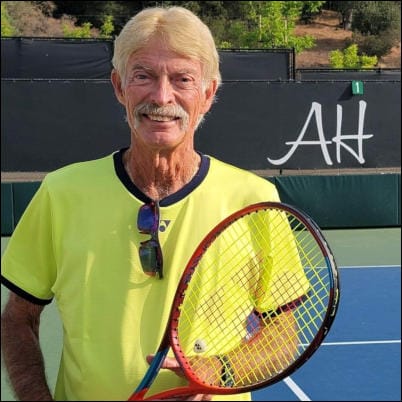 Ken DeHart | Ken DeHart
|
International Speaker at the Australian, Wimbledon, and US Open Coaches Conference
Author of “Master Your Tennis Game - 50 Mental Strategies and Tactics”
Co-author of the International Book of Drills with Dennis Van der Meer
Member of the Directors Club of America