- Racket Business
- Posts
- Advancing Tennis with Play, Games, Sports, and Athletics
Advancing Tennis with Play, Games, Sports, and Athletics
Gary Horvath on the need of the industry to collaborate to market the brand TENNIS.

Gary Horvath
December 30, 2025

Advancing Tennis with Play, Games, Sports, and Athletics
The Importance of Play, Games, Sports, and Athletics to the Tennis Industry
Qualified and certified tennis professionals understand the role of play, games, sports, and athletics in attracting and retaining tennis players. The knowledge of these activities:
Lays the groundwork for the design and development of programs that meet the needs of players at all levels.
Allows professionals to set and manage expectations.
Makes it easier to include a larger number of players in programs - players have different demographics and priorities.
The Relationship Between Games, Play, Sports, and Athletics
Play is a form of activity that is not structured. It is pure, creative, and spontaneous. It does not require coaches, officials, scoreboards, or cheerleaders. Boys and girls may run, jump, skip, do cartwheels, or chase grasshoppers. Give them a ball, and they may try to sit on it, kick it, bounce it, or throw it against a wall. Adults may dance, hike, or work in their garden.

Games are a form of activity with a limited number of rules. Games may be competitive or cooperative. Coaching is not essential.
Play and games are distinct activities enjoyed by people of all ages. Effective professionals may incorporate games and activities into sports and athletics.
Sports are more structured than games. There are teams, coaches, officials, equipment, and a scoreboard. There are winners and losers. Sports are competitions, played by amateurs for the “love of the game.” In addition, athletes will learn life skills (leadership, discipline, time and stress management, and teamwork).
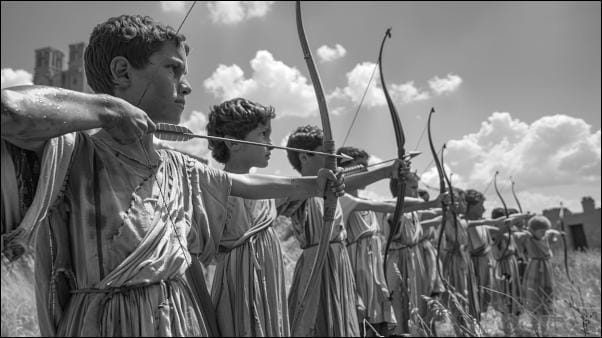
Sports originated in Greece. Some sports had similarities to the military. For example, they have captains, uniforms, formations, tactical units, and specialized competition.
Athletic competitions have a more formal structure than sports. They are competitive events that exist solely for determining a winner. There are minimal rules that allow competition that is just short of open warfare. The purpose of athletic competition is entertainment and financial gain. For example, the recent match between Nick Kyrgios and Aryna Sabalenka, and its coverage by Tennis Channel, provided unique entertainment in the form of a tennis match, which was financially beneficial.
In the mid-to-late 1800s, the Amateur Athletic Association of England (AAA) was formed to establish common standards in amateur sports. The Amateur Athletic Union (AAU) was formed with a similar purpose in the U.S. It was the first national governing body (NGB) for sports.
The AAU’s broad authority over amateur sports was removed by the Amateur Sports Act of 1978. There was a restructuring of the USOC, now the U.S. Olympic and Paralympic Committee. As a result, Olympic sports had their own independent governing bodies.

On a side note, the USNLTA was formed in 1881 to standardize rules and equipment for tennis, maintain standards for sportsmanship and amateurism, serve as a centralized NGB, and establish a national championship. That year, Richard Sears won the initial U.S. National Championship. For better or worse, the oversight of tennis by the USTA has extended well beyond its original intent.
U.S. Play, Games, Sports, and Athletics in 2026
For better or worse, two major changes have occurred in the sports and tennis industry over the years:
Play, games, sports, and athletics have all been commercialized. This is a function of the above-mentioned restructuring of amateur sports and American capitalism.
Tennis participation has had only two significant spikes since the Open Era. The increases were a result of government intervention, not promotional efforts by the industry. The participation spikes were a result of the passage of Title IX and federal policies related to COVID-19. For decades, many of the accomplishments of the NGB for tennis, the USTA, have been offset by its inappropriate and ineffective overreach.
Commercialization of Play, Games, and Sports
A quick Google search will produce results showing there is an abundance of activities where participants can experience play or game activities, such as:
Life skills through sports.
Holistic - mind, body, spirit.
Adventures - hikes, crafts, sports, and pool time.
Ninja warrior-style camps - running, climbing, and jumping.
Problem solving – architecture, engineering concepts.
On a similar note, opportunities exist to participate in sports activities.
Traveling teams - usually sponsored by schools and private clubs.
Excellence training programs for elite players.
Ability-based programs for players at various levels.
League and tournament circuits.
Sports camps (individual or multiple sports).
Topical training – mental toughness, strength and conditioning, or fitness.

The commercialization of play, games, sports, and athletics has provided society with a wider range of opportunities to experience. The downside is that not everyone can afford that benefit.
Play, Games, Sports, and Athletics – The Need for Marketing and Collaboration
The Tennis Industry Association reports that only about half of all U.S. tennis players, or fewer than 13 million, play at least ten times a year. To put this in perspective, this level of participation is about the same as the Japanese viewership of Game 7 of the 2025 World Series.

As leaders in the industry, the RSPA and the PTR must demonstrate their expertise as bodies of certified professionals who understand the role of play, games, sports, and athletics in advancing the sport. These professionals have a variety of tools in their arsenal by which they can attract and retain more players.
The RSPA and PTR must convince the industry to play together nicely in the sandbox – starting with the USTA. For the tennis industry to excel, the USTA must understand that tennis exists in different forms (play, games, sports, and athletics).
The USTA must also perform its basic obligations in an exemplary manner. That includes working with and supporting members of the industry rather than competing against them. Finally, the industry must collaborate to market the brand TENNIS.
The solution is simple!
 Gary Horvath | Gary Horvath is a USPTA master pro, founder, and past president of the USA Professional Platform Tennis Association, a charter member of PPTR, a certified coach with USA Volleyball, and a long-standing member of the Wilson Advisory Staff. His experience as a tennis pro has covered the entire spectrum from grassroots to college tennis. |
In addition, Gary Horvath has conducted extensive business and economic research that has largely supported the state of Colorado's economic development efforts.