- Racket Business
- Posts
- Disrupting the Country Club, Not the Community: Golden Racket Academy and The Future of Private Tennis & Pickleball Lessons
Disrupting the Country Club, Not the Community: Golden Racket Academy and The Future of Private Tennis & Pickleball Lessons
By Albin A., Founder, Golden Racket Academy

Albin Abdiji
March 14, 2026
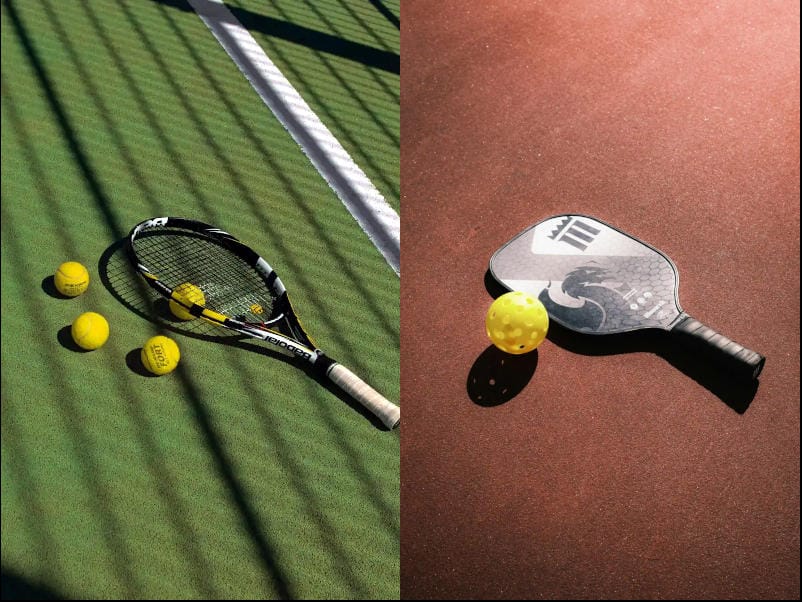
If you are reading this, chances are you already know what the numbers look like for racket sports. Courts packed from sunrise. Waiting lists that stretch months. A sharp, almost daily uptick in requests for private coaching. Racket sports in the United States are in the middle of something genuinely special, and if you are part of this industry, that growth is the best thing in the world to watch happen.
Within that growth, however, there is a conversation that this industry has been avoiding. Not a complicated one, and not a new one. Just an uncomfortable one that tends to get buried under the excitement of expansion and the noise of new money entering the space.
Packed courts and rising coaching demand are good problems to have. But pressure reveals character. And when you mix surging demand with the reality that not every actor in the theater of racket sports cares about the sport as much as they care about the financial bottom line, you end up somewhere that nobody who genuinely loves this game wants to be.
So let's have the conversation.
The Problem Put Plainly
Everyone in this industry knows the access problem. Public courts are overcrowded and heavily contested, especially in major metros. Private clubs operate on waitlists that stretch years long, with initiation fees that price out the vast majority of people who actually want to play. The people building mobile coaching businesses looked at that situation and saw an opportunity. And they were right. The opportunity is real.
Venture-backed platforms with serious capital flooded the market by sending coaches out to teach commercial lessons on public courts managed by concessionaires, without permits, without authorization, without paying a single dollar to the people who maintain those facilities. The model is built on willful ignorance. Flood enough cities with enough coaches, collect your platform fees, and worry about the legal and community fallout later. Or never.
The local pros who spent years building relationships with park departments, paying their permit fees, and investing in those communities get undercut by a contractor with an app and no accountability to anyone. The concessionaires who rely on court fees to keep the lights on get their revenue stripped out from under them. And the municipalities are left holding a liability they never agreed to carry.
This is not a bootstrapped startup struggling to navigate regulations. These are well-funded companies that absolutely know what they are doing and choose to do it anyway because the economics are convenient.
It Doesn't Have To Be This Way
As someone who fell in love with pickleball as the logical next step on my tennis addiction, I always wanted to do something with these two sports at the center. This is when Golden Racket was formed. And just like anyone joining an industry like mine, the first question I had to answer was: where do our coaches actually teach? The lazy answer was public parks. The courts are there, the players are there, and enforcement is inconsistent enough that you could probably get away with it for a while.
But that is antithetical to everything I've stood for as a fan of the sport, as someone who loves tennis and pickleball. For a minute, it felt like we either had to abandon all principles or abandon Golden Racket.
And this is exactly why this conversation matters so much. Not just because the problem exists, but because the solution is not complicated. There is a clear way to do this right. There is a way to be on the right side of this industry, to grow alongside it rather than feed off it, and to build something that the people who built this sport before you would actually respect. The only thing missing has been someone saying it out loud.
So we started looking at the infrastructure that everyone else in this conversation seems to ignore. Across the United States, there are tens of thousands of tennis and pickleball courts sitting in private HOA communities, luxury apartment complexes, and residential backyards. These courts are underutilized by almost any measure. The people who live near them want coaching. The spaces exist. Nobody is using them commercially because nobody bothered to build a system around them.
That became our baseline. We built Golden Racket Academy from the ground up around private court access. We send vetted, background-checked coaches to the courts that our clients already have access to. The coach comes to them. There is no public court dependency, no permit gray area, no concessionaire getting cut out of a transaction happening on their property. It is a cleaner model and, practically speaking, it produces a better product for the client.
The Playbook We Actually Run
I want to be specific here because I think vague commitments to doing things the right way are worth very little. Here is what our actual operating model looks like.
Zero tolerance on squatting. Every coach who joins our network is explicitly told that unauthorized commercial coaching on concessionaire-managed public courts is grounds for immediate removal from the platform. This is not a guideline buried in an onboarding document. It is a condition of being on our platform.
Private courts as the operational foundation. Our default operating environment is HOA courts, apartment complex courts, and residential private courts. We work closely with clients to ensure the coaching arrangement is legally sound and genuinely welcome in their space.
Data-triggered public court expansion. We track registration metrics city by city. When we see a market generating strong player demand but struggling to fulfill lessons because of limited private court access, that data triggers a process. We do not send coaches out hoping nobody notices. We initiate the permit process, we pay the fees, and we secure the legal umbrella before our coaches step foot on public commercial property. It takes longer. It costs more. It is the only way we are willing to do it.
The Bigger Argument
The mobile coaching model is not the problem. The model is genuinely good for the sport. It lowers the barrier to entry. It meets players where they are. It opens racket sports to people who will never join a country club and should not have to. The people in this industry who built the sport before the apps arrived deserve to benefit from that growth, not get steamrolled by it.
The question is whether the companies scaling these platforms are willing to accept that doing it right costs more and takes longer. The shortcuts are visible to everyone in this industry, even if they are not always visible to the general public. The local pros know. The concessionaires know. The park departments know.
I am not writing this to shame anyone by name. I am writing it because I think the standard in this industry needs to be said out loud by people who are actually operating in it. If you are running a mobile coaching business and you know your coaches are teaching commercially on unpermitted public courts, you have the resources to fix that. The margin you are protecting by not fixing it is coming directly out of the community that built this sport.
We are three months into scaling Golden Racket nationally and we have not once asked a coach to fly under the radar. It is possible to build something real here without taking shortcuts at the community's expense. That is the only version of this business I am interested in running.
 | Albin Abdiji is the founder of Golden Racket Academy, a mobile tennis and pickleball coaching marketplace operating across the United States. Golden Racket connects players with vetted, background-checked coaches at private HOA courts, apartment complexes, and residential courts nationwide. Learn more at goldenracketacademy.com. |