- Racket Business
- Posts
- Never Stop Learning
Never Stop Learning
Toroian, Kraev, Soloway - plus LinkedIn Gold


Bakhtior Kraev,, Cassandra Toroian & Robert Soloway
May 02, 2026
Table of Contents
C. Toroian: You Jumped Into the Deep End. Now Learn to Swim.

You Jumped Into the Deep End. Now Learn to Swim.
Why Single-Brand Exclusivity Deals Are the Wrong Life Preserver for Racquet Sport Facility Owners
By Cassandra Toroian, CEO Ruley.ai and Volleybird LLC
Congratulations. You did it. You signed the lease, poured the courts, hung the lights, and opened the doors on your brand-new racquet sport facility. Maybe it’s tennis and pickleball. Maybe you’ve added padel. Maybe you went all-in on the multi-sport concept with a bar, a lounge, and a merch wall that looks like it belongs in a boutique hotel.
You jumped into the deep end. I respect that. I’ve done it myself—multiple times across multiple businesses. And as you’ve probably found out already, the hard part isn’t building the facility. It’s running it – and keeping it open, profitably. One of the first tests of whether you’re going to make it, is how you respond when one of the big brands shows up at your door with a check. The Knock on the Door If it hasn’t happened yet, it probably will soon. A rep from one of the major equipment manufacturers—you know the names—will sit down with you and make a compelling offer. Become an exclusive facility for their brand; carry only their racquets, paddles, bags, and accessories. Use only their balls. In return, you get a sponsorship check, co-branded signage, and maybe some demo inventory at no cost. It feels like validation. A global brand wants to partner with you. I’m going to ask you to pause before you sign anything. I’m going to ask you to use your discernment. Because, as mother always told you, there is no such thing as a free lunch.d |  Kyle LaCroix: Most industry professionals wait until they’re struggling to ask for help. They’re already in too deep and now afraid to take the next step. That’s why they stay stuck. |
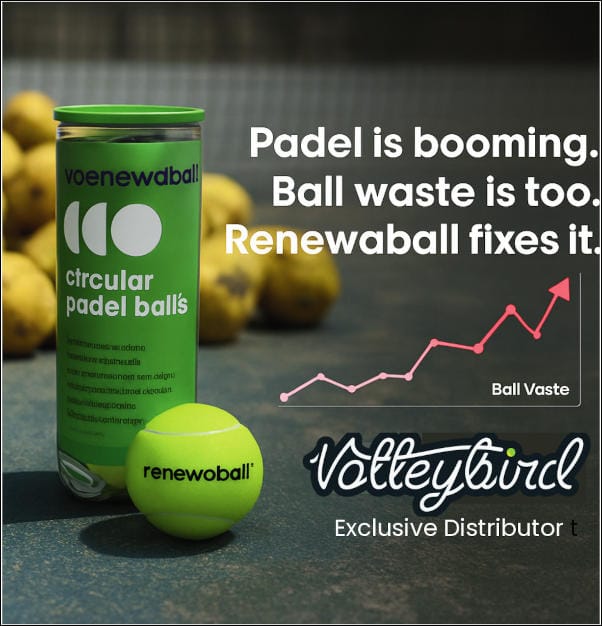
Step back and look at the big picture. Traditional retail is dying—specialty racquet shops are disappearing; big-box sporting goods stores offer no brand control, and online discount is a race to the bottom based only on price.
Your facility, with its captive audience of active players who trust their pro and love their club, is the last premium point of sale left. That means you have valuable shelf space. And, those big brands - well, they’re renting your shelf space.
My words of advice to you, entrepreneur to entrepreneur: the exclusivity deal is a false choice.
That big brand is not going to refuse to sell you a case of practice balls because you also carry an emerging brand on your shelf. They’re not going to blacklist your facility because your pro shop offers curated accessories alongside their racquets. They want the distribution too much. The power dynamic is not what you think it is.
The key to your control over your margins, your club’s ethos, and your profitability, is the white space that you fill with differentiated, higher-margin products that give your members a reason to buy from you instead of pulling up Amazon on their phone in your parking lot. You don’t have to pick one. But when you sign an exclusive deal, you’re voluntarily giving up that option in exchange for solving a problem that doesn’t actually exist.
I know it may be tempting when starting out to take a deal for some upfront cash. But when you lock into a single-brand arrangement, you’re trading your pro shop’s valuable asset: curation authority.

Your members are not walking into your facility to buy the same products they can find on every major e-commerce site on the internet. They’re coming to you because you’re supposed to be the expert. The person who can put something in their hands they’ve never seen before and say, “You need to try this.” That’s curation. That’s expertise. That’s what Amazon cannot replicate.
Differentiation Is Survival
How many racquet sport facilities are opening right now? Hundreds? Thousands? How many of them look roughly the same? Most of them. Nice courts, similar programming, the same league structures, comparable pricing. If you’re an operator, your differentiation problem is real, and it’s only going to get more acute as more facilities open in your market. Your pro shop is one of the few areas where you can genuinely stand apart. The mix of brands you carry, the products you introduce to your community, the story you tell around what’s on your shelves—that’s branding. That’s identity. That’s value proposition. When you hand that over to a single brand, every facility in your region that signs the same deal becomes interchangeable with yours. Before you know it, you’ve commoditized your club. And when things get cyclical, like they inevitably do, you’ve got to have as many levers to pull as possible. A Better Path ForwardHere’s what I’d tell you as someone who’s built and exited multiple businesses, who distributes products to facilities like yours, and who cares deeply about the long-term health of these sports: |  (WCRS) Women Coaching Racquet Sports: May is National Tennis Month and a powerful moment to celebrate the Women who are shaping the future of our game.  Across the country, female leaders within (WCRS) continue to raise the standard through their passion, dedication, and unwavering commitment to growth. They are not only driving success on and off the court, but also creating spaces where equity, inclusion, and opportunity thrive. |
Carry the big brands. Your members expect them, and those products move. But treat them as your baseline, not your identity.
Curate. Find the emerging brands, the specialty consumables, the gear your members can’t discover on their own. That’s where your margin lives, and it’s where the relationship with your customer deepens.

Protect your options. Every exclusive deal you sign is another door you’ve closed. In a rapidly evolving market—where padel barely existed in the U.S. three years ago and new product categories are emerging constantly—flexibility is your most valuable strategic business asset.
Think like a retailer, not a billboard. Your pro shop should be a revenue center with real margin, not a branding exercise for someone else’s company. If a manufacturer wants to pay you to be a billboard, ask yourself what that tells you about the value of the real estate they’re buying.
Nobody is going to protect your business for you. Not a brand deal, not a sponsorship check, not a co-branded banner. The operators who thrive in this next chapter will be the ones who maintain control of their own shelves, their own story, and their own options.
Keep swimming.
 | About the AuthorCassandra Toroian is the Co-Founder and CEO of VolleyBird, a premium multi-brand distribution platform serving the tennis, pickleball, padel, and golf markets, and Ruley.ai, a B2B SaaS platform delivering AI-powered sports rules intelligence. (Here is our September 2025 article about Ruley.) |
B. Kraev: Tennis Training System without language and hearing barriers
By Bakhtior Kraev, Krasnoyarsk, Russia
Practical Approach to Tennis Training through Body and Movement
I am a coach with over 12 years of practical experience. More than 6 years of my work have been dedicated to training an athlete who has been deaf since birth, which has allowed me to develop a systematic approach to learning through the body and movement.
 | This approach is not based on theory but on long-term practical work and observing how the body reacts to the ball, movement, and game situations, regardless of hearing or language. Currently, I present this approach in different countries and am seeking partners to launch a pilot project, with the aim of researching, adapting, and potentially integrating it into the sports system. |
An Approach Formed Through Real Sporting Practice
The approach was formed through many years of practical work with a student who is deaf from birth.
Start of joint work — 2018;
More than 6 years of continuous training;
|  |
The athlete’s results received public recognition:
The student became the absolute national junior champion of deaf;
The sporting achievements and the story of our joint work were covered in the media.
 | International Experience: Participation in ITF M15 / M25 tournaments (Monastir)
|
Practical case: an athlete deaf from birth
Our case with a deaf athlete demonstrates that a properly structured approach allows for systematic and effective development in tennis. The method overcomes language and hearing barriers, which means that regular athletes can easily follow the same path, minimize mistakes, and unlock their potential. The universality of the method allows it to be scaled for anyone looking to improve their results.
7-minute feature about us on local media  It is important to emphasize that in the public space, the athlete’s results were highlighted, while the approach itself became the internal methodological foundation behind those results, formed and refined throughout the training process. |  |
Learning through Body and Movement
My approach is based not on explanations, but on working with the body, movement, and repetition.
Even if the coach and athlete do not speak the same language, the body perceives movement in the same way. This makes the learning process more natural, understandable, and sustainable. The approach develops the athlete’s correct bodily responses to the ball:
Thus, training affects not only technique but also the athlete’s game behavior, reducing reliance on hearing, language, and verbal explanations, and building skills directly through movement. |  |
Minimal and Functional Communication

A Systemic Solution with International Potential
Today, most “deaf tennis” is actually dominated by hard-of-hearing athletes, as they are able to learn through traditional, verbal-based coaching methods. For athletes who are fully deaf and use sign language as their primary form of communication, tennis remains a nearly insurmountable barrier. |  | Beyond sport, this approach creates a completely new professional pathway for deaf people, including the opportunity to become tennis coaches themselves — something that does not yet exist as a structured system anywhere in the world. |
My Contribution to Human Capital Development
What can I bring?
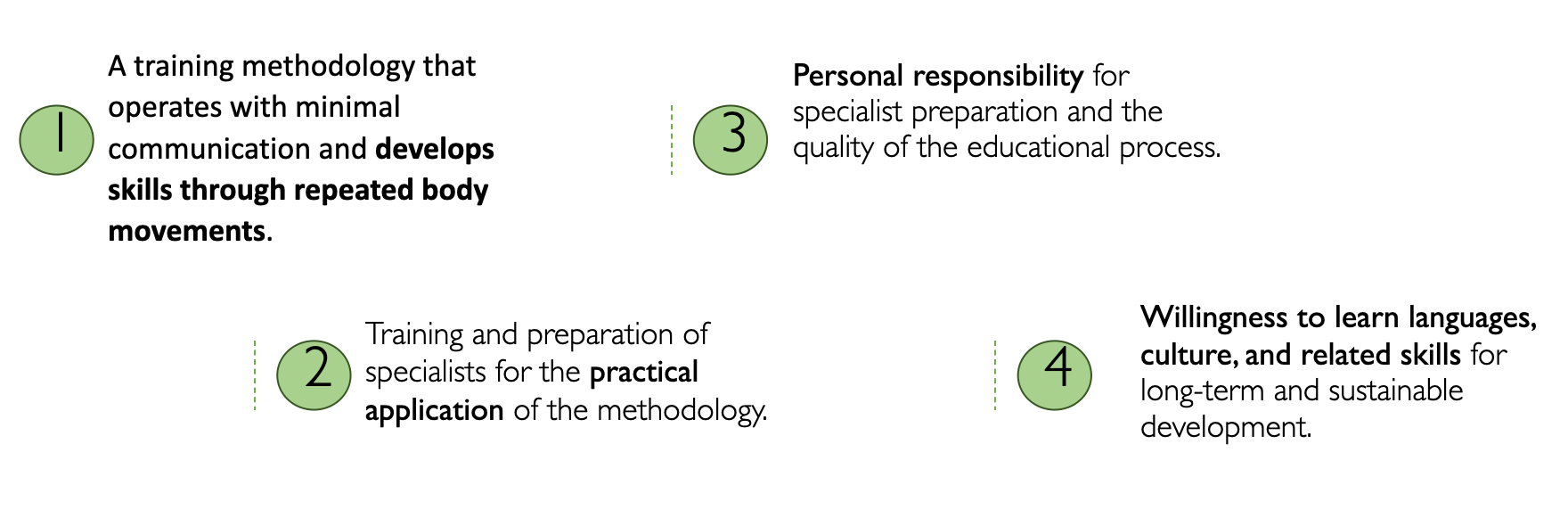
What do I want from our cooperation:
|  |
Conclusion:
I am looking for people who are interested in my experience and the value that we can create together.

 | About the AuthorBakhtior is a tennis coach and the author of a unique training approach based on systematic, algorithm-like exercises that develop ball feel, technique, biomechanics, and tactical thinking more simply and effectively than traditional methods. From an early age, he sought to understand the nature of success and devoted years of practice to it. A special focus of his work is training athletes with hearing impairments, helping them reach a high level, as confirmed by his players’ results in national and international competitions. |
R. Soloway: The Art of Aiming
By Robert Soloway, PhD
The Art of Aiming
Let me start with a question. Who taught you to walk? Did dad yell, “Pick your leg up higher”? Did mom demonstrate balance by walking like she was on a tightrope? Even if they had, you were pre-verbal. You wouldn't know what they were telling you. And speaking of speaking, who taught you to speak? This is probably the hardest motor skill we do regularly, yet we've never gotten instruction and have no idea what our body parts are doing when we speak. What does your tongue do when you say “G's”? I can't even describe the movement after I feel it. What do your lips do when you say “W's”? It's a little “kissy” movement. Who knew?!
How do we develop our motor skills? If I wanted to go sit in a chair across the room, that would be the last conscious instruction my mind would give my body. No one walks around thinking, “leg up”, leg down”. The body, controlled by the nonconscious mind, figures out everything. The general rule is that the conscious mind sets intention, and the body (non-conscious) does the motor skill. And that's our clue as to how tennis instruction can be improved. The conscious mind needs to be taught how to set the intention, on the court, in such a way as to communicate it with the body. Then the body needs to be allowed to figure out how the intention is best done. That's how we work. So what is the intention on the court? Well, from the time your opponent hits the ball until you hit the ball, your intention is to hit a particular shot back. We generally call that AIMING. The job of the conscious mind is to aim. That is the immediate intention. | Lane Evans: I had the incredible honor of sharing the stage with the one and only Ken Dehart and legend, Sir Jack Groppel. We told stories and reflected back through our careers. I always learn from these guys. The DCA Retreat is a wrap, but will stay engraved in my mind for quite a while. Great presentations, new friends in one of the most beautiful clubs in the world. The Retreat is special! Jarrett Chirico and Cris Gale knocked it out of the park. Thank you! I’ll be back! |
Why does aiming fall to the conscious mind? The nonconscious knows how to do motor skills, like running and hitting something with a stick, but we aren't born with the knowledge of the rules and strategy of the game of tennis. Aiming is how we apply the rules and strategy. It's the only job of the conscious mind in that interval.
Let me give you examples of what aiming does for you. Suppose you were throwing darts toward a target, wearing a blindfold. How much better would you get? Maybe a tiny bit. Now take off the blindfold, and you automatically begin to aim. You throw one high and then low, and you improve because you are now getting feedback. This feedback loop leads to self-correction. Did you change your wrist motion or your arm movement to improve? Who cares?! You improved, just like you improved your walking and talking, naturally.
In tennis, if you don't aim, your rate of self-correction and improvement is minimal, like the blindfolded dart thrower. Start aiming correctly, and your self-corrections will speed up your improvement many times.
Aiming is the mental challenge of tennis. In a long match, you might have to decide on a target hundreds of times, each in a few seconds. That's challenging. Some beginners set an aim of “just hit the ball in that direction” or “just hit the court”. Here's how that develops. I observed a coach giving a lesson. He was standing midway between the service line and the net. He's feeding a relative beginner at the opposite baseline. The first ball was hit into the net, right on the strap, but with no arc, so it was several inches too low. | Alex Skinner: I was 21, assistant pro at a tennis club down the Cape. By the end of that summer, I knew I wanted to be the director there. Not somewhere like it. That club. It took 9 years. |
The coach said nothing. The next ball was hit deep and loopy into the deuce court corner, but in. The coach said, “Good.” The next shot landed in the exact opposite corner, but in. The coach said, “Good.” I asked the coach how he knew which ones were good, to which he replied, “Well, they were in.”
I pointed out that if the student had been aiming for the deuce corner, then the second was good and the third bad. If the student had been trying to hit it back to the coach, only the ball into the net was any good.
This kind of general feedback slows progress. The student is left thinking that anywhere on the court is good. That's the opposite of aiming. It's nearly mindless tennis. If you aren't using your conscious mind productively, by aiming, it will work against you. This also inhibits progress. A drill without a target is not as productive as it could be. The student needs the internal feedback loop to self-correct.
Players who aim generally pick a spot to aim for, but aiming is more than picking a spot on the other side of the court. Of course, picking a spot is better than not, but a “target” is much more than that. Here are the problems with a spot on the other side of the court:
Understand that while the coach focuses on the body (the stroke), the beginner's mind is developing its own mental game. If the mind isn't focused on aiming, what is it doing? It's probably tensing up because you're a beginner and you miss regularly, or you hate your backhand, or you've already swung and completely missed your first attempt at serving. This anxiety becomes your mental state. This tension can linger for years and inhibit rapid improvement. Aiming has other benefits. It makes you watch the ball more closely. Our eyes don't take orders; they take requests. Look at your hand. Now see if you have any splinters. Did you zoom into your hand? Of course. Your request required a closer look. It's the same with the ball. If you're just trying to hit it, you look in the general direction. | Victor Bergonzoli: Exciting News! SportsEdTV is live on FreeLiveSports.tv, bringing our expert coaching content to millions of sports fans through FAST streaming.  Victor Bergonzoli: The Rise of AI: Preserving Good Content Through Collaborative Validation. In the age of information overload, the proliferation of AI-generated articles and blogs has presented a significant challenge in discerning between good and poor-quality content. A beacon of hope emerges as new search engines recognize the importance of collaborating with trusted entities such as SportsEdTV. |
When you try to hit an exact shot, you watch more carefully. This also speeds progress. Ball watching is fundamental to playing and improving.
So you have to learn to aim correctly.
Here's how I begin. I teach a basic grip and let the player adjust it if they feel uncomfortable. I put my hopper on the ground, by the center strap, about 6 inches off the net. My student, on the same side, stands behind the service line, slightly on their forehand side. I stand straight in front of them at the net and toss the ball to them, on a bounce, as nicely as I can. Their instruction: Get the ball in the basket. If I have two or more students, I create a scoring system: one point for bouncing the ball within a foot of the basket, two points for hitting the basket, and five points for getting it in the basket. Next, I do backhand. Then I move the basket to the other side of the net, near the service line, and we play the same game. In minutes, they are hitting balls over the net near the basket. Are they crushing the ball? No. I'm setting up the proper channels of communication; the conscious mind thinks the intention, in this case, aiming, and the body figures out how it is done. Proper communication between the mind and the body speeds up learning.
Playing aiming games not only helps with focusing, but it also reduces the usual stress involved with learning strokes. When your mind is occupied with aiming, it has less room and time for stressful thoughts. Stress slows progress. Relaxation speeds progress.
I do a drill where I put out a couple of targets and call out, “target 1”, or, “target 2,” as I toss the ball. I don't have to provide a reward by saying “good” or “bad”. They know when it's good because they have a target, and more importantly, their body (non-conscious) knows when it's good. The body will reward itself with a feeling of satisfaction or success. Any behavior that results in a reward of any kind is more likely to be repeated. That's learning, like a treat for your pup when it sits. Internal rewards speed progress.
So now, here is the aiming technique itself. As the ball is traveling to you, create in your mind's eye, a line showing the trajectory you want your return shot to travel. Start the line at your approximate point of impact, and take it at least to the bounce on the other side of the court. As you and the ball get closer, this line will automatically adjust slightly as your impact point becomes fixed. Your intention is to put the ball on the line. The line is your target, not a spot on the other side of the court.
Here's what the line does for you:
Once you grow familiar with your shots, you won't need to envision the entire flight trajectory. The first few feet will do. |  Victor Bergonzoli: Breaking the Ice: Understanding Small Talk Culture in America. In one of my articles, I talked about the cultural differences between Europe and the USA. Moving to the United States was a cultural adjustment as a Swiss national. I was used to getting straight to the point in the conversation and found myself frustrated with the amount of time spent on small talk, especially about topics not related to our meeting. |
You set the ball on its way, and the rest of the flight is predictable. This is very much like the arrows that are on a bowling alley. They are there as targets because the pins, like your target on the other side of a tennis court, can't be in the same view when you release the ball. The arrows are placed just for that reason. Once your roll is predictable, you need only set the ball on its way toward the arrows, and the rest follows. This is what the trajectory provides for tennis players: a target in their view as they strike the ball. This also speeds learning.
Once you're aiming properly and seeing the ball better, you are ready for the “secret” of learning tennis. You don't actually swing at the ball. You swing at a spot in the air, namely, the impact point. Swinging at a moving ball is very hard perceptually. If your head is moving at all, it's nearly impossible. But you don't have to stare at a moving object because you aren't swinging at a moving object. You're swinging at the impact point, a motionless spot in space.
Everybody has to project the last few feet of the flight of the ball that they want to strike. That's how we hit it. We launch our swing when our (nonconscious) mind has determined the projected impact point. At that moment, the ball has served its purpose, to determine the impact point, and you must now ask your eyes to give up the ball and stare at the projected impact point. It takes a tiny eye movement. Now your head is still, and your eyes are staring at a motionless spot. This is a much easier visual task. When you do it, you will see the racket come into view and strike the ball. Your body will be happy it no longer has to swing at a blur. The ball and the racket meeting in a moment of stillness is a beautiful thing. |  Ian Rapport: POP Tennis has been around for over a century. But now it's starting to really take off. I sat down with Mitch Kutner, President of the International POP Tennis Association, Inc, to understand why the sport is gaining momentum and where it fits in today’s racket sports boom. |
Your hitting will go to a new level of consistency. Also, aiming becomes easier when you have such visual clarity. Of course, this level of focus speeds progress at all levels.
There's one more advantage you gain from aiming. Aiming properly is “Zone” inducing. The Zone, a high state of focus, is now known to science as an example of The Flow State. They exist in every sport (actually, every activity). Science discovered that to get into a Zone, you must be focused on one thought, in the present moment, that is creative and/or productive to what you are doing. From the time your opponent hits the ball until you hit the ball, that one thought is your target (trajectory). It fulfills all the requirements to enter a Flow State; it's singular, it's in the moment, and it's creative and productive. This will send your focus through the roof and speed improvement, no matter what level you play.
I believe these techniques speed learning and will make more people want to play. Why is it important NOW to speed the learning of tennis? Tennis must compete with the ease of learning the other racket sports. You can play Pickleball on Day 1. If tennis beginners can't find fun fast, we'll find them on the Pickleball court.
 | About the AuthorRobert Soloway has a PhD in Cognitive Psychology with a specialty in Motor Skills. He is author of Tennis in the New Age: Modern Science and Ancient Wisdom. Robert has taught tennis for more than 30 years. Dr. Soloway can be reached at [email protected]. He is available for training in the LA area or for online consultations. |