- Racket Business
- Posts
- Never Stop Learning
Never Stop Learning
Kyle LaCroix on Leadership, Loren Anderson on Teaching Methods. Amy Moline on the University of Nebraska.



Kyle LaCroix, Amy Moline & Loren Anderson
March 01, 2026
Table of Contents
Kyle Lacroix: If You Think Like Staff, You Earn Like Staff. If You Think Like Ownership, You Get Paid Like Leadership.
If You Think Like Staff, You Earn Like Staff. If You Think Like Ownership, You Get Paid Like Leadership.
by Kyle LaCroix
In racquet sports, compensation follows contribution. Most professionals are trained to execute, but very few are trained to architect. Staff think in hours while ownership thinks in outcomes. Staff measure how many lessons they taught this week. Ownership measures how court utilization improved, how retention shifted, and how revenue per member increased. Staff focus on effort. Ownership focuses on leverage.
This is why experience alone does not guarantee advancement. A professional can spend twenty years delivering lessons and never once learn how to design a scalable program, build a compensation model that drives performance, increase lifetime member value, or present a strategic revenue plan to a general manager or board. The market does not pay for loyalty. It pays for leadership.
Leadership in today’s club environment requires fluency in revenue architecture, cost control, programming strategy, human behavior, and executive communication. When you begin thinking like ownership, you stop asking for raises and start justifying them. You stop waiting to be promoted and start becoming promotable. Income expands in direct proportion to the size and complexity of the problems you can solve.
That shift does not happen by accident. It requires intentional professional development, exposure to higher-level operational thinking, and a framework that connects racquet expertise with business acumen. That is precisely why SETS exists. SETS was built to help racquet sports professionals move from technician to operator and from employee to executive-level contributor. If you are serious about elevating your impact, your compensation, and your career trajectory, the time to upgrade your thinking is now.
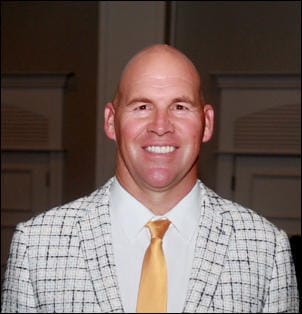 Kyle LaCroix | Kyle LaCroix, Founder & CEO of SETS |
Loren Anderson: Why “Just Fix It” Feels Right — and When It Quietly Gets in the Way
(Wisdoms from a Volleyball Coach Totally Applicable to Racquet Sports)

I came across a post recently arguing for a renewed push toward explicit instruction in classrooms. The idea was straightforward: clear teaching, fewer distractions, less cognitive overload, better learning. Strip away the fluff. Say the thing clearly. Teach it directly.
Honestly? I get it.
If you’ve ever watched students spin their wheels in an activity that looks engaging but produces very little learning, explicit instruction feels like a relief. No guessing. No chaos. Just clarity.
And in classrooms, that instinct often serves well. The information is stable. The Caribbean is where it is. A historical date doesn’t shift based on the learner’s mood. A math procedure follows a defined sequence. The learner’s job is to align their understanding with a stable external reality. Reduce cognitive load. Point attention in the right direction. Correct errors quickly so misunderstandings don’t linger. Good teaching.
But reading that post made me think about how quietly those instincts get carried into the gym — and how differently they land once they arrive.
Because sport isn’t stable.
Opponents move. Teammates are late. Timing shifts. Space collapses. The “right” solution on one play becomes the wrong one on the next. The information isn’t sitting still waiting to be transmitted. It’s emerging in real time, shaped by action.
Same teaching instincts. Very different consequences.
Let’s be honest about why explicit instruction is appealing in sport too.
It’s efficient. It’s visible. It restores order quickly. It makes everyone look like they’re doing the same thing.
Nothing calms a gym like uniformity.
When things start to feel messy — missed reps, ugly contacts, awkward timing — stepping in and “fixing it” feels responsible. It feels like coaching.
And sometimes it is.
But there’s another thing explicit instruction does very well, and we don’t talk about it much.
It reduces coach anxiety.
That doesn’t make it bad. It makes it human.
And it’s the part I want to stay with for a while.
There’s a term in motivational interviewing for this impulse: the righting reflex.
Something looks wrong. We feel urgency. We step in to correct it.
I still fall for this. More often than I’d like to admit.
But the moment that made me actually see it happened about twelve years ago. A player named Ciara — she was on a 14s team — went up on an overpass in the middle of a match and swung as hard as she could.
She hit it straight into the net.
And I remember jumping out of my seat. Correcting her approach. Her timing. Maybe even her intent — the decision to swing that aggressively in that moment. I had things to say, and I said them quickly, with the kind of urgency that feels like care but doesn’t always function as care.
It wasn’t until later that the real thing hit me.
If she had gotten a kill with that exact same swing — the same approach, the same intent, the same aggression — I wouldn’t have said a word.
I would have celebrated it.
The only variable between my correction and my praise was the outcome. Not her development. Not her decision-making. Not her learning.
Just whether the ball landed in or out.
That’s the righting reflex in its purest form. I wasn’t coaching Ciara in that moment. I was reacting to my own discomfort with the result. The correction wasn’t about her growth. It was about restoring a feeling of order — in the match, and in myself.
I wish I could say that was the last time.
It wasn’t.
A hitter’s arm swing looks off, and I open my mouth before I’ve finished watching. A passer solves the problem in a way I wouldn’t have chosen, and I feel the pull to redirect them toward my solution. A setter does something unconventional, and I feel that little flare of urgency — not because it failed, but because it didn’t match what I expected.
And when I step in, the gym settles. Everyone nods. The player adjusts. Order is restored.
Sometimes that intervention genuinely helps learning.
But sometimes — and this took me years to be honest about — it mostly helps me feel better.
It quiets the room. It reduces uncertainty. It reassures me that I’m being useful.
That’s not a confession of weakness. It’s a recognition of how powerful the righting reflex is. It disguises itself as responsibility. It feels like high standards. It wears the clothes of good coaching.
Which is exactly why it deserves scrutiny.
Here’s the thing about unstable environments that makes this so tricky.
When we see “bad form” in the gym, what we’re often seeing isn’t failure. It’s deviation from expectation.
And in environments where the problem keeps changing — where opponents adapt, where timing shifts, where space opens and closes — deviation is sometimes how better solutions are found.
Most of us agree on outcomes. Keep the ball alive. Score under pressure. Adapt when the plan breaks.
Where we get into trouble is assuming there’s only one acceptable way to get there.
Controlling the movement feels like controlling the outcome. In sport, it’s often a fragile shortcut.
“If I don’t correct it now, they’ll engrain bad habits.”
I hear this a lot. I’ve said it myself.
But one rep doesn’t engrain anything.
Ten reps without consequence might. A hundred reps solving the wrong problem definitely will.
What fossilizes habits isn’t patience. It’s premature certainty.
When we correct after a single iteration, we collapse the solution space before the athlete has felt what didn’t work, why it didn’t work, or what else might.
We don’t prevent bad habits. We prevent learning.
Exploration is not the same thing as mindless repetition. A player trying something and failing in a meaningful environment isn’t building a bad habit. They’re gathering information. The question isn’t whether we let them fail. It’s whether the environment gives that failure meaning.
I’m not asking coaches to change everything.
I’m asking for hesitation in one specific moment.
The moment you see what you’d normally call bad form.
Not forever. Not passively. Just long enough to see whether the system self-corrects.
In that pause, you can watch whether the outcome is still achievable. You can adjust the task or the constraint. You can notice what information the environment is actually providing.
Silence is still an intervention. It just doesn’t look productive on video.
And here’s the part that matters for experienced coaches, especially, because I know this is where the resistance lives:
Technique still matters. Standards still matter.
The difference is timing.
Techniques layered after perception and problem-solving that are anchored tend to stick. Technique imposed before the athlete understands the problem often creates compliance without adaptability.
The environment carries the standards first. Instruction refines them later.
That’s not anti-technique. That’s respecting how durable learning actually forms.
Resisting the righting reflex takes a specific kind of courage.
Not blind trust. Not “letting chaos reign.”
It’s a willingness to delay certainty. A belief that the athlete’s nervous system is remarkably good at adapting — if we don’t interrupt it too early.
That courage costs something.
It looks less controlled. It feels uncomfortable. It requires sitting with the possibility that what you’re watching isn’t broken — it’s just not finished yet.
But the behaviors that emerge from that patience tend to survive contact with the game. The ones that come from premature correction tend to look great in warmups and disappear under pressure.
I still catch myself doing it.
Last week. Yesterday. Probably tomorrow.
The urge to fix doesn’t go away just because you understand where it comes from. It’s not a switch you flip. It’s a practice — the same kind of practice we’re asking athletes to engage in. Messy. Iterative. Full of reps that don’t look right yet.
If you’re curious, try this:
The next time you feel the urge to correct form immediately, pause for one extra rep. Watch what happens. Adjust the task if you need to. Then decide whether the correction is still necessary.
Not whether it would be right. Whether it’s still necessary.
That’s a different question. And sitting with it might teach you something about your coaching that no clinic ever will.
 Loren Anderson | About Loren Anderson on his Substack platform: “Exploring modern volleyball coaching through curiosity, adaptability, and innovative methods. Dive into strategies, player development, and fresh perspectives inspired by ecological dynamics, motivational interviewing, and more.” Loren is a volleyball coach who owns the Tualatin Valley Volleyball Club in Hillsboro, Oregon. |
Amy Moline: Flexible High School Options for Student-Athletes
I want to share with you how the University of Nebraska High School (UNHS) can serve as a valuable academic partner for student-athletes balancing rigorous training and competition schedules. UNHS offers:
A fully accredited U.S. high school diploma program and individual supplemental courses
NCAA-approved courses for college-bound student-athletes
Flexible, self-paced, 100% online learning that accommodates travel and tournament schedules
Rolling enrollment with no set dates, allowing students to start anytime
A portable academic program students can continue anywhere in the world
We have a long history of supporting motivated student-athletes and helping them stay on track academically while pursuing high-level competition.
If you have any questions or would like more information for yourself, your players, or your organization, please feel welcome to
. Referrals are always appreciated, and I’m happy to assist any students or families you work with.
Thank you,
 |
|
With a student-centered approach, she helps learners navigate flexible pathways toward graduation, NCAA eligibility, and postsecondary success. Her work bridges communication, strategy, and support to ensure students have clear, confident next steps.