- Racket Business
- Posts
- On The Court with Ken DeHart
On The Court with Ken DeHart
Your Path to success...

Ken DeHart
March 16, 2026
Your Path to success....
As you navigate your journey through your career or personal life, here are
three questions to consider:
1. Evaluate where you are currently
2. Determine where you would like to be
3. Define the steps necessary to begin the journey
A basic example:
1. I am a rookie tennis teaching professional. I played high school and college tennis, and taught tennis during the summers to friends or at a local academy. I have my degree in business and love being outside and being an athlete. I live at home or in an apartment and have minimal expenses.
2. I would like to become a full-time tennis teaching professional and perhaps own my own academy or be a hitter on the pro tour.
3. Get my certification from the PTR, RSPA, or USTA. Work at a local club, maybe where I spent my junior years, where I know the pro there and most of the members. Teach next to an experienced pro at the club to see what they do and things I could add to my coaching of my players. Be sure to teach both private and work with junior and adult clinics, as all require a different skill set.
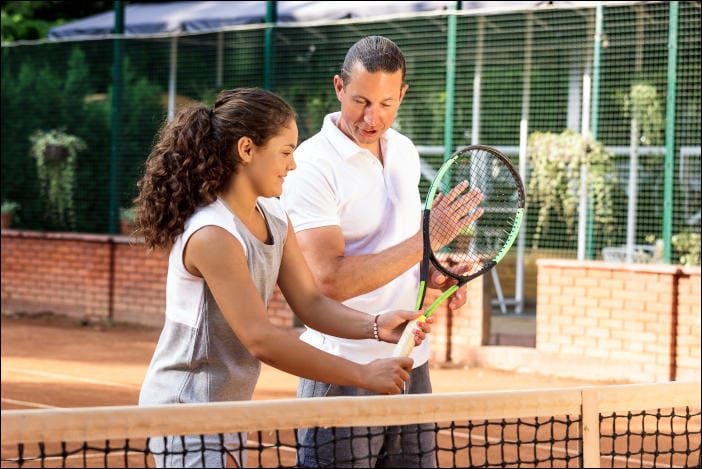
Take continuing education courses and attend every tennis pro conference I can to learn, and especially grow my network of friends and other coaches.
The same questions can apply to business, club management, or other life skills.
Keep it simple coaching:
There are only three basic skills in any ball sport.
1. Catch it = a volley
2. Toss it = ground stroke
3. Throw it = serve
The explanation is to think about the three simple motions in ball sports and how the hand is involved while using the artificial hand or racquet.
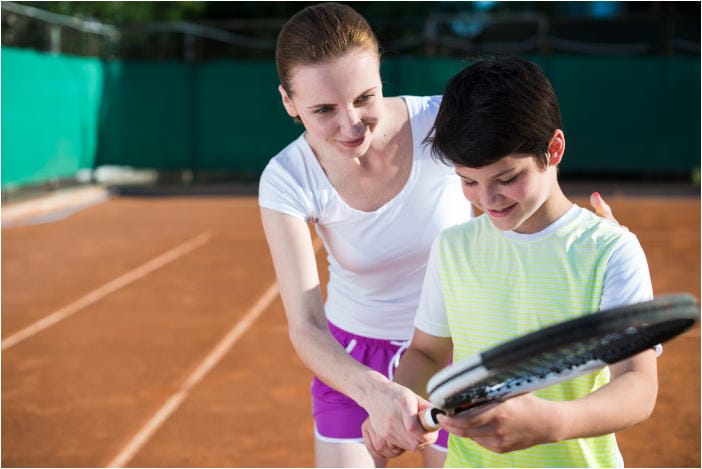
All three motions require a relaxed hand position, having a target to direct the ball to, and movement to get in position to execute the three motions.
1. The volley requires minimal hand motion and movement to get in position to receive a ball at the level you feel most comfortable catching it.
2. The ground stroke is a lifting or tossing motion for topspin, a slight cutting motion for underspin, a target to aim your tossed ground stroke toward, and footwork to execute a balance tossing or cutting motion
3. The serve is a simple throwing motion to a target. One hand places a ball in the strike zone of the other hand, and the palm of that hand directs the ball toward your intended target. Movement is very minimal because you control the location of the ball that the serving hand will use to guide the ball to its intended target
Find out what previous sports a student has played and relate them to how that sport relates to tennis. Players relate to visual and kinesthetic cues better than auditory cues. But a combination of all three can offer the best learning experience.
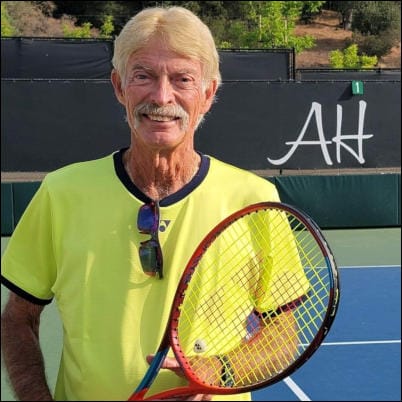 Ken DeHart | Ken DeHart
|