- Racket Business
- Posts
- Building in Public
Building in Public
In the tech space, they have something called "building in public." It's essentially an open journal detailing the journey of creating and launching a new company. I thought the racquet community might enjoy reading a series like this while we build solutions together. So here goes!

David Pyrzenski
March 24, 2026
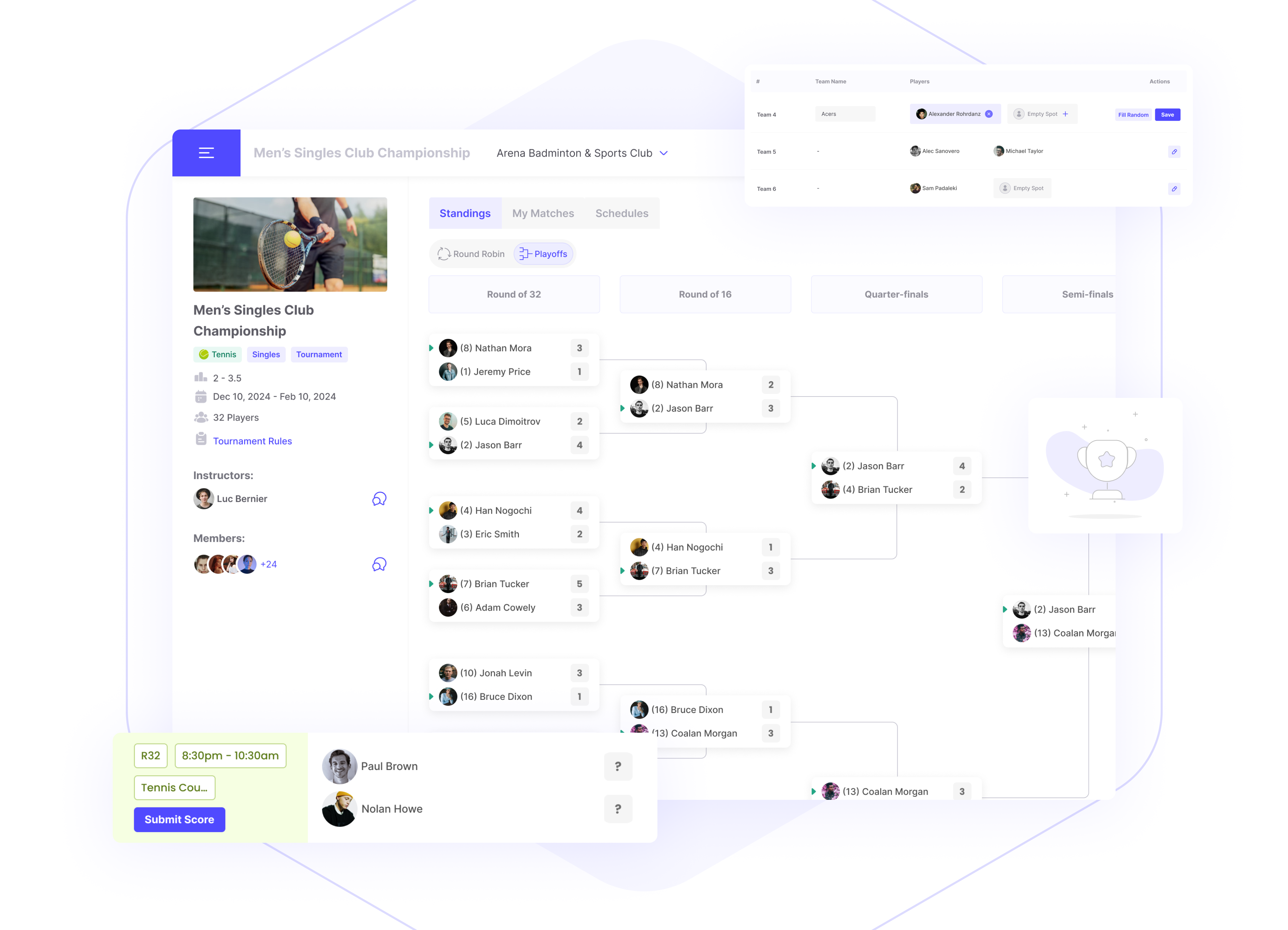
If you looked at the racquet sports software space from the outside, your first reaction would probably be, "Why build another platform?"
There are already plenty of tools: scheduling systems, booking platforms, league software, communication apps. On paper, it looks like a solved problem. But the more time I spent inside clubs, the more something felt off. Courts were sometimes full, but varied widely by sport. Members were showing up, but they weren't returning as often as they could. Instructors struggled to fill clinic or lesson spots, while people wanting lessons couldn't find openings with instructors. Directors were busy, but a lot of that time was spent holding things together manually.
Nothing was completely broken. But nothing felt fully optimized either. What stood out most wasn’t a lack of software. It was a lack of connection. New players didn’t always know who to play with. Clubs didn’t always know how to engage members beyond basic programming. And a lot of the experience depended on a handful of people manually making things happen behind the scenes.
That’s where it clicked for me. Most of the existing tools are really good at managing operations. They help you book courts, manage members, process payments. But they don’t actually solve the hardest part of running a club: Getting people to consistently show up, fully participate, and feel like they’re part of something. And when that doesn’t happen, everything else suffers. Utilization becomes inconsistent. Retention becomes harder. Revenue becomes unpredictable.
So even though the market looks crowded, I started to see a gap. Not just another system of record. A system that actually helps create connection inside the club. That’s what led to CourtMatch. We’re not trying to reinvent the wheel. A lot of what we have will look very familiar to people using existing solutions. We’re focused on the missing layer, the part that actually drives engagement.
The interesting part is, the deeper I get into this, the more I realize how nuanced the problem really is. It’s not just about skill levels or scheduling. It’s about behavior, preferences, confidence, and community dynamics. I’m still early in this journey, and I’m learning a lot in real time. Some of my initial assumptions were correct. Some weren't and we prioritized incorrectly early on. But that created a lot of great learning that got us where we are now. I’ll share more of that in the next post.
For now, I’m curious, if you’re involved in running or playing at a club, what’s the hardest part about keeping people consistently engaged?
About the Founder David Pyrzenski is the founder of CourtMatch.ai and a lifelong racquet sports enthusiast turned technology entrepreneur. With deep roots in the racket sports community from competitive play in his youth to coaching juniors and remaining an active club member, David experienced firsthand the operational challenges that many clubs face. Marrying that passion with a professional background in software development and customer experience, he set out to build a platform that unifies court reservations, leagues, lessons, memberships, communication, and analytics into one intelligent system designed to boost engagement and streamline club operations. His mission with CourtMatch is simple: to help clubs spend less time on fragmented systems and more time connecting players and growing vibrant communities. Connect with CourtMatch on LinkedIn Learn more about CourtMatch.ai and benefit from a lifetime discount |  |