- Racket Business
- Posts
- Social Media - the world's largest professional networking and learning platform
Social Media - the world's largest professional networking and learning platform
Influential voices in racquet sports share ideas and post their viewpoints and techniques

Rich Neher
March 18, 2026
I am a strong believer in the power of networking. Have been exhibiting at over 120 trade shows in my life, which was once one of the most powerful avenues for networking. As an early adopter of LinkedIn (started posting in May of 2007) and Facebook (started posting in April of 2009), I saw their potential as networking platforms pretty quickly and cultivated numerous friends and connections.
My networking activities proved quite successful from 2014 on, when a large number of my LinkedIn connections began to sign up for the predecessor of Racket Business, the Tennis Club Business newsletter. To this day, most of the subscriptions for Racket Business come from LinkedIn. I just love this platform.
A lot of the influential voices in racquet sports have discovered Social Media to share ideas and post their viewpoints and techniques. I am taking the liberty of re-posting some of the very interesting posts to show you what is going on and to stimulate comments and encourage discussions.
Check me out on LinkedIn https://www.linkedin.com/in/richneher/
and on Facebook https://www.facebook.com/neher/.
Table of Contents
LinkedIn: Jarrett Chirico, DCA
https://www.linkedin.com/in/jarrett-chirico-dca-b7712649/
Posted on March 4, 2026
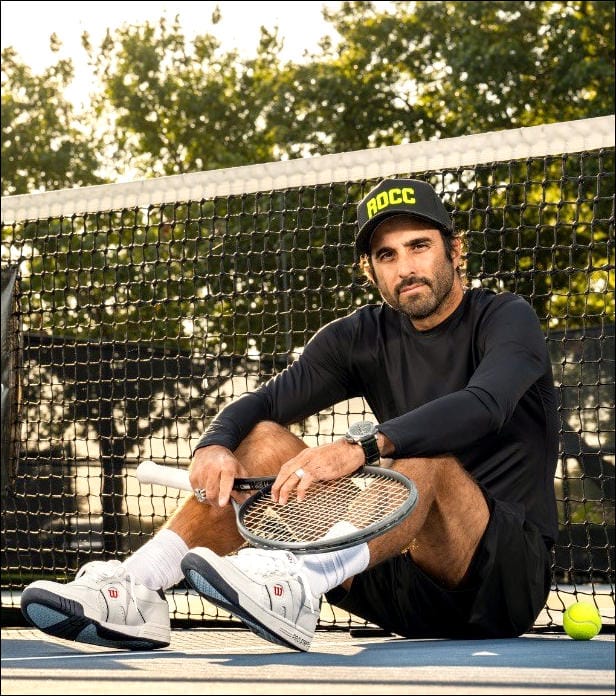 | Jarrett Chirico is the Director of Racquets at the North Hills Club in Raleigh, North Carolina, and the President and Founder of The Directors Club of America, which is home to the largest network of industry leaders in the hospitality industry. Jarrett has directed numerous top-tier Racquets programs in the country, including the largest and most notable in the hospitality industry at Royal Oaks Country Club. |
An Earned not Given Mindset
Success isn’t a title. It isn’t a bio line. It isn’t the word leader stamped on a LinkedIn profile.
No one cares what you do.
They care who you are and how you changed your life.
Early on, I thought programs mattered. Numbers mattered. Growth charts mattered. How many programs. How many members. How many partnerships. But the truth is this: people don’t follow numbers, they follow people.
They want to know how you went from nothing to something.
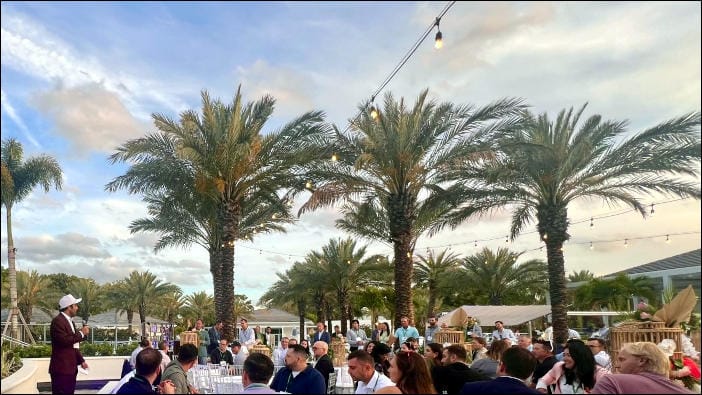
How you built a brand when no one was watching. How you built clubs when resources were tight. How you built a business when it was just an idea and a vision. How you brought competitors together and turned them into collaborators. How you made money. How you created opportunity and refused to stay small.
That’s what people care about.
The word “leader” has grown old. It’s overused and under-earned. What matters now is connection. If you can’t connect, you can’t lead. If you can’t inspire, you can’t scale. If people don’t feel you, they won’t follow you.
I believe proximity changes everything.
If you are within 25 feet of a high achiever, you get 15 percent better. You think bigger. You move faster. You see what’s possible. Energy transfers. Standards rise. Excuses shrink.
That’s why rooms matter. That’s why environments matter. That’s why I’ve always focused on building spaces where ambitious people collide.
Most people are lazy. Not physically but mentally. They want to copy instead of build. They scroll instead of create. They repost instead of risk. But we are in an age of building. We’ve always been in an age of building. The tools are everywhere. The opportunity is everywhere. The question is whether you’re willing to step forward and construct something that didn’t exist before you.
You want to make a lot of money? Say it.
You want to be wildly successful? Own it.
Then connect with the best people in the room or build a better room.
Tell your story. Tell them how you did it. Tell them what you make. Not to brag but to show what’s possible. Transparency creates belief. Belief creates action.
Be the light in the dark that people are drawn to.
Not another motivational quote. Not another recycled post. Not another voice in the noise.
Build something real. Become someone real. And watch how many people decide to walk with you.
Success isn’t about what you do.
It’s about who you become and who you bring with you.
LinkedIn: Kyle LaCroix
https://www.linkedin.com/in/kyle-lacroix-8b512b1b/
Posted on March 10, 2026
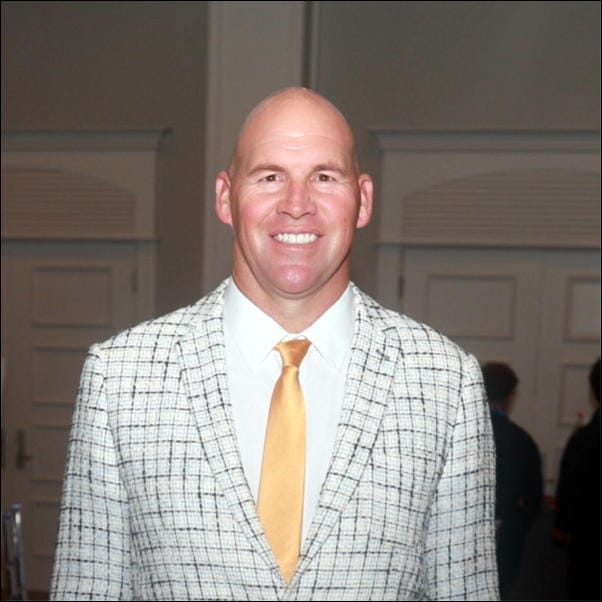 | Racquet sports professionals and executives usually maximize their ability but not their potential. I help those who are stuck become unstuck in their careers. |
When I started
When I started in this industry, I believed the path was simple.
Teach well.
Work hard.
Opportunities will appear.
What I eventually learned is that talent and effort are not always enough.
The racquet sports industry is full of incredible professionals who never reach their potential because they lack something critical.
Guidance.
A mentor can collapse years of trial and error into a few conversations.
That realization is what eventually led me to build SETS.
Not as a business.
But as a mission.
Because our industry has extraordinary people in it.
What it has lacked for too long is a clear pathway for those people to grow into leaders. And when professionals grow, the entire industry grows with them. I'm Kyle LaCroix, I'm here to help you grow and get the most out of your career and life.
*Please check our article in this issue, titled “Sets is Making Waves.”
LinkedIn: Mike Barrell
https://www.linkedin.com/in/mikebarrell/
Posted on March 3, 2026
 | Mike Barrell is a 30-year Tennis Teaching Professional, now the Executive Director of Tennis for SPORTIME Clubs. Previous clients include Lawn Tennis Association (LTA Tutor delivering Coach Education and Assessment), |
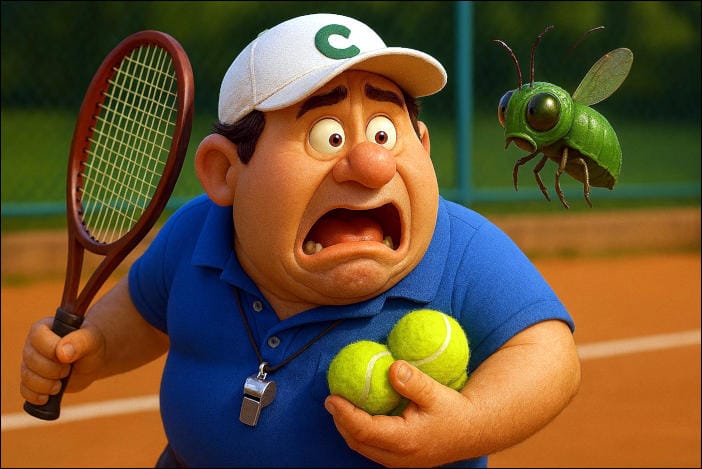
Something’s Bugging Me
I am battling with my brain, yes, we are sometimes at odds, and maybe you can help. I keep reading that tennis needs to make things easier, even though data still says that we are one of the best at recruiting players.
But .. and here is my challenge. Modified equipment has been around for more than 40 years. We have the tools; they actually have not changed much either. Which leads me to a more challenging question that I keep battling. Maybe it's the wrong conversation... maybe it’s not about making things easier, maybe it's about making things more valuable.
This is a perspective that committed players get; they understand the value of practicing, competing, and spending money on equipment and membership. They join a tribe that is sticky and very difficult to leave. Tennis is their tribe and part of their identity. So how did they get to this point? Is the problem really that tennis needs to keep making things easier, or does it need to look at the value it brings to people’s lives?
I am not suggesting that value is a price issue, or even that we need to change the pricing structure, more that value is the manner in which we design things to meet fundamental human needs. And somehow, we keep assuming that if we make something easy and we make something cheap, that we counterbalance, or worst still, ignore the idea that we didn’t really focus on value. So, this post is more of a conversation starter.
Let’s bash an idea around and see if we can find more value in ways that get people seriously excited about our sport. Your serve…..
Facebook: Patrick Mouratoglou
https://www.facebook.com/patrick.mouratoglou
Posted on March 7, 2026
 | Tennis speaks the language of life. What allows one to grow and succeed on the tennis court applies equally to life. Working with Serena Williams and Simona Halep, opening the Mouratoglou Academy, launching UTS and developing the global Mouratoglou brand taught me key life lessons and business skills that go beyond the sport. |
Will Tennis Die in 5-10 Years?
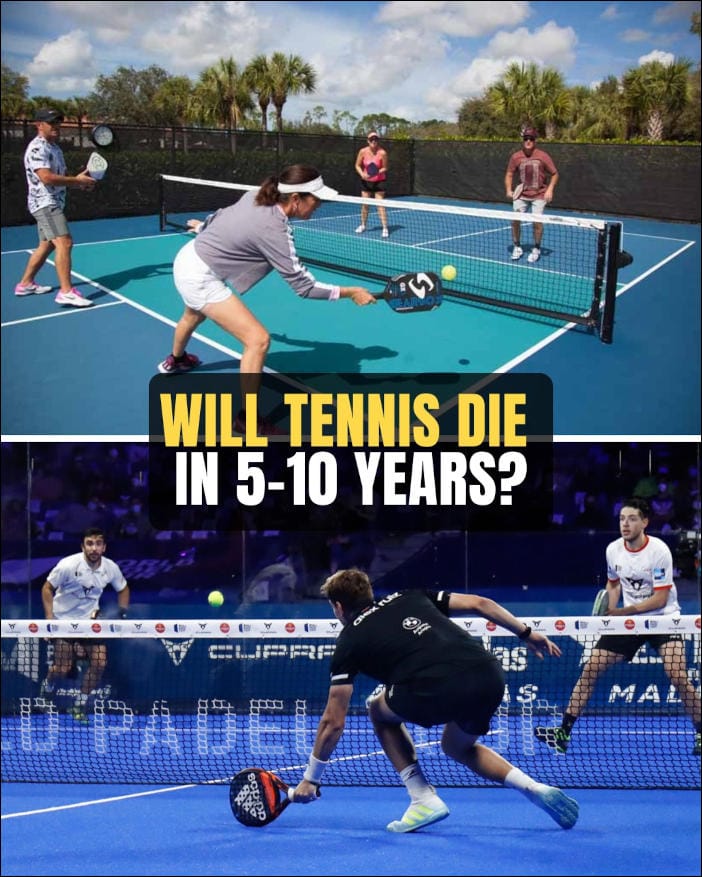
I wouldn’t say tennis is going to die — but it could be in deep trouble.
There are two main challenges the sport is facing today.
First, the competition. Pickleball in the US and padel in many other countries are growing very fast. They are easy to access, easy to enjoy from day one, and you don’t need special qualities or years of practice to start having fun. That’s the danger. Tennis takes time. It takes many hours before you truly enjoy it, and in today’s world, people are looking for immediate pleasure. Even federations are encouraging clubs to replace tennis courts with padel courts. That should make us think.
Second, the way people watch tennis. Younger generations are not watching full matches anymore. They consume short pieces of content. The traditional format works for people who grew up watching tennis decades ago, but it doesn’t necessarily work for the new generation. If fewer young people play and fewer young people watch, the sport could be in serious trouble.
But what can we do about it? Is there any solution?
I think there is.
Firstly, I believe we need to teach tennis in a more fun way from the beginning, not in a boring way where it takes months before you enjoy it. And second, that’s also why I created UTS: to propose a shorter, faster, more intense, and more immersive way to consume tennis for the younger generation.
Tennis doesn’t need to disappear — but it does need to evolve.
Do you think tennis should adapt to survive — or is the traditional format strong enough as it is?
LinkedIn: UFDORS
https://www.linkedin.com/company/uf-dors
Posted on March 10, 2026
 | The University of Florida's Personal Brand Management for the Racquets Industry course is designed to equip current and aspiring professionals with the tools needed to stand out and advance in an increasingly competitive field. |
On a recent Racquet Fuel podcast with Kim Bastable & Simon Gale, Brian David Dillman hits on something our industry needs to say out loud more often: Growth doesn’t happen by accident, it happens when leaders advocate! They speak up!
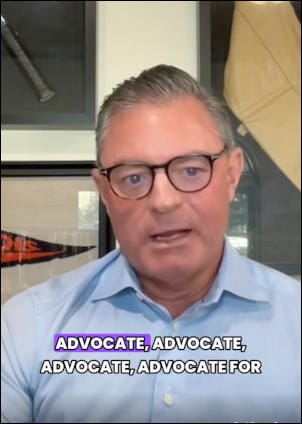
He said: Advocacy isn’t being loud — it’s being prepared.
As they say, “the squeaky wheel gets the grease.” If your club needs new courts, be a little squeaky. If you see padel trending in your area and your members asking about it, be a little squeaky. If you want to see policies changed so non-members can join your groups, be a little squeaky.
But don’t just share your opinion – back it up with data, trends, consumer sentiment -- whatever you need that will clarify and sharpen the ask.
If you’re a coach, director, or aspiring leader, this conversation is a reminder that the future of racquet sports isn’t just built on great forehands and backhands, but, rather, it’s built on leaders who speak up and lift others as they climb. Thanks, Brian, for sharing your passion for good leadership.
Catch the full episode with Brian's leadership lessons: lessons: https://lnkd.in/gr4Rcre8
LinkedIn: Jonathon Maine
https://www.linkedin.com/in/jonathonmaine/
Posted on February 24, 2026
 | Real estate development and construction executive with 15+ years scaling complex, multi-market programs across the US, UK, Australia, and Israel. |
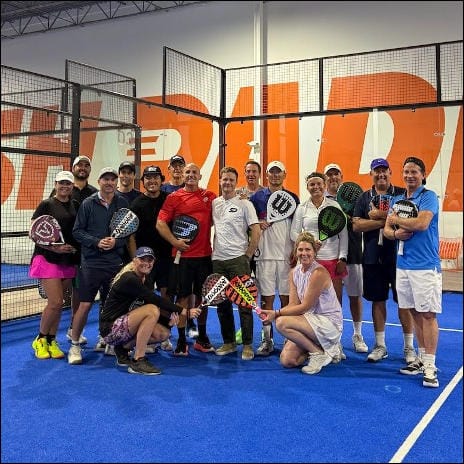
Today I'm building Smash Padel — Colorado's first padel club — from the ground up, owning everything from site selection and permitting to capital raising and P&L. In parallel, I provide fractional advisory support to founders and operators navigating complex real estate, construction, and expansion decisions.
My work sits at the intersection of capital, operations, and execution — turning growth strategy into real buildings, real locations, and real businesses.
Smash Padel
2 years ago I bet my career on a sport nobody had heard of. Here's where that stands today.
When I founded Smash Padel, I got a lot of polite smiles and "that's interesting" from people who clearly thought I'd lost the plot.
Padel. A sport played on an enclosed glass court, bigger than tennis in Spain, exploding across Europe and Latin America, and almost completely unknown in the US.
Two years later, that's changing fast.
We've built something real at Smash Padel. One location (for now), five courts, and a community that keeps coming back. 65% of first-time players return, which tells you everything about what this sport does to people once they try it. We're about to host the Colorado Indoor State Championships and we're just getting started.
In two weeks I'll be at RacquetX, the national racket sports conference, connecting with operators, investors, and industry leaders who are paying attention to where this sport is going.
A few things I know to be true heading in:
The operators who move now will own their markets. The early window is closing.
Padel's trajectory in Europe is the US playbook. We just need to execute it.
Courts are a commodity. Community is the moat.
If you're going to be at Racket X, let's find time to talk. If you're not but you're watching the padel space, shoot me a DM.
The best bets always look crazy at first. 🎾
LinkedIn: Shivain Suroya
https://www.linkedin.com/in/shivain-suroya-12135b279/
Posted on December 17, 2025
 |
|
“The Most Serious Group in Tennis”
People often think beginner tennis sessions are the easiest, most relaxed part of coaching.
I don’t agree.
If anything, the youngest group — the kids who are just starting — is the most serious group of all.
Why?
Because that’s where tennis actually begins.
Not at competition level, not at UTR chasing, not at high-performance programmes.
It begins with:
🎾 the first grip they hold
🎾 the first swing shape they feel
🎾 the first footwork pattern they repeat
🎾 the first sense of timing their muscles learn
This is where muscle memory is created.
This is where habits form — good ones or bad ones.
And this is where a coach’s responsibility is the highest.
Kids may look like they are having fun (and they should!),
but their brains and bodies are absorbing everything at 100%.
As coaches, we don’t just teach strokes.
We set the foundation for a player’s entire tennis life.
The fundamentals at age 6–10 decide the player they become at 16–20.
That’s why I take beginner groups extremely seriously.
Fun on the outside, precision on the inside.
Because this stage isn’t “basic.”
It’s the blueprint.
LinkedIn: Juan Garcia
https://www.linkedin.com/in/juan-garcia-tennis/
Posted on March 12, 2026
 Juan Garcia | Juan Garcia Juan Garcia is the Director of Racquets at San Dieguito Tennis Club in Encinitas, California, and an award-winning RSPA professional. He is widely respected for his ability to develop players at every level and build thriving racquet sports communities. |
Why Interpersonal Intelligence Builds Trust That Lasts
Series: Choosing Character Over Talent in Racquet Club Operations (Part 9)
Technical skill may earn respect.
Interpersonal intelligence earns trust.
In racquet clubs, trust is everything. It’s what keeps members coming back after a tough lesson, a losing match, or a frustrating week. It’s what turns casual participation into long-term loyalty.
Interpersonal intelligence is the ability to read people, not just players.
It shows up when a coach or staff member understands:
• Who needs encouragement and who needs challenge
• When to push and when to pause
• How to motivate different personalities without treating everyone the same
• How emotions impact performance, learning, and engagement
Great professionals don’t coach the sport first.
They coach the person in front of them.
This skill is often overlooked because it doesn’t show up on résumés or certifications. But members feel it immediately. They know when they’re being understood, and when they’re being managed instead of supported.
Interpersonal intelligence creates long-term relationships because it builds psychological safety. Members feel comfortable asking questions. Players feel safe failing. Parents feel confident in who is guiding their children.
Without it, even well-run programs feel transactional.
From a leadership standpoint, this trait is a multiplier.
Staff with strong interpersonal intelligence:
• Defuse tension before it escalates
• Strengthen communication across departments
• Adapt tone and approach based on context
• Represent the club with emotional maturity
They don’t personalize setbacks.
They don’t take feedback as an attack.
They don’t need to dominate conversations to feel effective.
They listen.
They observe.
They respond intentionally.
This is what separates good coaches from trusted advisors.
In hiring, interpersonal intelligence should be evaluated through stories, not statements. Ask how candidates handled conflict, motivation, or difficult personalities. Their answers will reveal far more than their win-loss record.
Because in the end, members don’t stay for drills alone.
They stay for relationships.